
OEM Conveyor Belt Production Line Customization for Efficient Industrial Operations
2026-11-02
Every conveyor belt production line claims to boost efficiency, but off-the-shelf solutions often ignore the specific bottlenecks that slow down real industrial operations. What if your line could be built around your actual process instead of forcing your process to fit a standard design? That is exactly the gap that OEM customization fills—and SFC has been quietly redefining how manufacturers think about conveyor belt systems. In this post, we explore the key considerations behind OEM conveyor belt production line customization, from material selection to layout engineering, and why partnering with a specialist can turn a generic line into a precision tool for efficient operations.
Engineering the Belt Path Around Your Floor Plan
Laying out a belt path isn't about drawing a straight line from point A to point B. The floor plan itself dictates how the belt will bend, climb, or wrap around existing equipment and structural columns. Start by mapping every fixed obstacle—support beams, doorways, loading docks, and maintenance clearances—because these create the hard boundaries your routing must respect. Once those constraints are marked, the belt usually finds a more organic shape, often following the perimeter or weaving through aisles in ways that minimize transfer points and keep material flowing without sharp direction changes.
Tension and tracking behavior change dramatically with every horizontal curve and incline. A path that looks efficient on a top-down drawing can create uneven wear or spillage if the curve radius is too tight for the belt's width and stiffness. Instead of forcing a route that fights the floor plan, adjust the layout to give the belt room to flex where it needs to. Sometimes shifting a workstation by half a meter or moving a drop point a few degrees off axis saves an entire transfer station downstream. The goal is a path that respects the building's geometry while letting the belt run quietly, with as few powered turns as possible.
Material Selection Based on Load, Temperature, and Abrasion
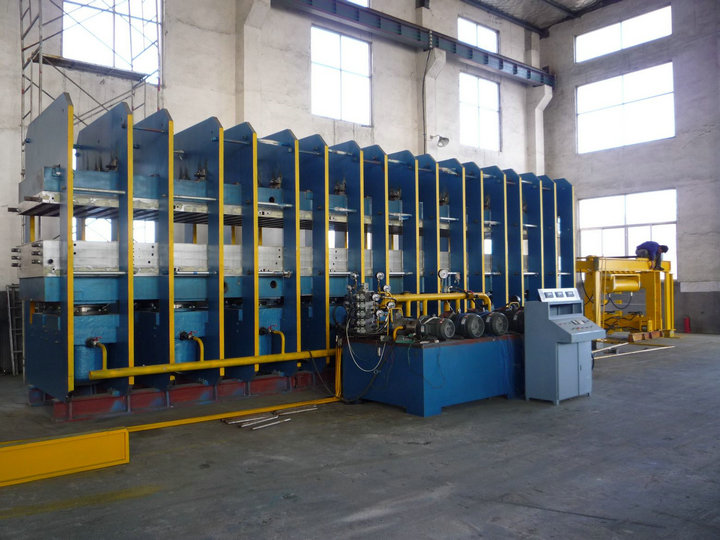
Choosing the right material starts with mapping the real operating conditions—not just checking datasheet limits. For load-bearing parts, yield strength and fatigue resistance often matter more than ultimate tensile strength because cyclic stresses can cause cracks long before a single overload would. A shaft that sees intermittent shock loads may need a tougher alloy, while a constant high compressive load might favor a hardened steel or even a ductile iron depending on the geometry.
Temperature changes the picture quickly. At elevated temperatures, creep and oxidation become dominant, so materials like stainless steels, nickel alloys, or ceramics may outperform plain carbon steels even if the room-temperature strength looks lower. Thermal expansion mismatch also matters when two materials are joined. For abrasive environments, hardness alone isn't enough; the microstructure and work-hardening behavior determine whether a surface will gouge or polish under sliding contact. A high-chromium white iron can resist low-stress scratching, but under heavy impact a tougher manganese steel may be the better choice because it hardens locally while the core stays ductile.
Balancing all three factors usually means accepting trade-offs. If a component must handle high temperature and abrasion simultaneously, a cobalt-based overlay or a ceramic-metal composite might be justified despite higher cost. The key is to test coupons under combined conditions rather than relying on single-property rankings.
Controls Integration That Talks to Existing PLCs
Most automation platforms force a hard choice—rip out the PLCs you already trust or live with a bridge that drops half the tags. This integration starts from the opposite assumption: your existing ladder logic, function blocks, and scan times are worth preserving. The control layer connects directly to Allen-Bradley, Siemens, Mitsubishi, Omron, and Modbus TCP devices through their native protocols, not through a generic OPC wrapper that hides the details you actually need. It reads symbolic names, aliases, and even undocumented memory areas when the original engineering files are long gone.
What makes the difference is how the system handles state, not just data. A heartbeat register, a handshake bit, or a custom UDT isn't treated as an afterthought—it becomes part of the same event stream as your process values. If a PLC goes into stop mode, the integration sees that as a discrete change and can trigger the right response without polling a status word every 200 milliseconds. This means alarms fire when they should, and maintenance gets a clean picture instead of a wall of timeout errors.
For plants with mixed vintages, the same tag browser works across a 1990s SLC 5/05 and a brand-new S7-1500. You map once, and the system remembers the data types, scaling, and read/write privileges. No separate gateway software, no XML export from the engineering tool, and no requirement to put the PLC on a separate network just to keep the integration from interfering with the process. It fits into the existing rack, the existing subnet, and the existing maintenance routine.
Pre-Assembly at the OEM Shop Saves Weeks On-Site
Moving assembly work off the congested site and into the OEM's controlled shop changes the project timeline in ways that field crews rarely expect. Piping spools, valve manifolds, instrument stands, and even walkways get bolted together on jigs before they ever see a foundation. That shift eliminates the usual stop-start rhythm of site labor: no waiting on crane picks, no weather delays, no crowded laydown yards swallowing half the schedule. A module that would take three weeks of piecemeal field fit-up can often be checked out, pressure-tested, and wrapped in under five days at the shop.
The savings show up most clearly in the interface work. At the OEM shop, pipe fitters and electricians work side by side with the same drawings, so routing clashes get caught on a bench, not on a lift. Weld inspections, torque checks, and loop tests happen before shipping, which means the site crew doesn't inherit a punch list full of surprises. Instead of sequencing dozens of small tasks around other contractors, the site only needs to rig the assembly into place and make final connections. That single move often pulls two to four weeks out of the critical path, especially on retrofit projects where access is tight and every hour of crane time is already oversubscribed.
There is a discipline to making pre-assembly pay off, and it starts with freezing the design early. Last-minute changes in the field cost double; last-minute changes in the shop cost almost nothing by comparison. The best OEMs build a mock-up bay and run through the entire assembly sequence with their own crews, so the site receives something that has already been proven to fit. That is not just a time saver—it changes the tone of commissioning, because the problems that usually surface in the last week have already been found and fixed before the truck leaves the dock.
Safety Guards Designed In, Not Bolted On Afterward
When a machine's safety guard is part of the original design, it doesn't fight the machine's purpose—it shares it. The guard's geometry, material, and placement are considered alongside moving parts, access points, and operator workflow. This means no awkward retrofits that block visibility or require extra steps. Instead, the guard becomes a quiet, integrated component, almost invisible until it's needed.
That early integration also changes how failures happen. A bolted-on guard can be removed, forgotten, or bypassed because it feels like an obstacle. A designed-in guard, however, is often impossible to remove without disabling the machine itself. Its attachment points, interlock switches, and structural supports are woven into the frame. So the safe state is the default state, not an afterthought that must be maintained.
Lifecycle Support From First Sketch to Final Retrofit
Every project begins as a rough sketch on paper or a simple conversation about an idea. From that first mark, we work alongside you to shape the concept into a buildable design, checking structural logic, material choices, and local code requirements without slowing the creative process. Our involvement at this early stage catches costly surprises later, so the leap from concept to site is never a blind one.
As drawings become specifications, we stay in the loop with site visits, supplier coordination, and ongoing value engineering. Changes happen – a wall moves, a beam is re-sized, a finish is swapped – and each adjustment is tested against the original intent. We document every decision, so the team on site is never guessing. This middle phase is not just about drawing updates; it is about keeping the project honest to its first sketch while making it real.
When the structure is up and the systems are running, our role does not end at handover. We return for performance checks, fine-tuning, and any retrofit needs that emerge once the building is occupied. Whether it is a subtle adjustment to daylight or a full mechanical upgrade years later, we treat the building as a living thing that still answers to that earliest sketch. Support continues, quietly, until the space works exactly as it should.
FAQ
It goes far beyond picking a belt width and length. A genuine OEM customization starts with mapping your material flow, throughput targets, and space constraints, then engineering the frame, drive, controls, and belt surface as one integrated system. You might end up with angled transfers, accumulation zones, or even washdown-ready components depending on the operating environment.
Industries with non-standard product dimensions or harsh conditions see the biggest gains. Food processing often needs stainless steel and easy-clean designs, mining requires impact-resistant belts and dust control, and automotive assembly lines depend on precise indexing and robotic handoff points. Customization pays off when a standard line would force you to compromise on safety or throughput.
Off-the-shelf lines often leave gaps between modules that cause jams, spillage, or manual intervention. A custom line is designed around your actual load profile, so you can reduce transfer points, match motor sizing to real torque requirements, and integrate sensors that adjust speed automatically. The result is fewer unplanned stops and a smaller energy bill per unit moved.
Look for a partner that asks about your bottlenecks before quoting a price. They should offer material samples, layout drawings, and a clear timeline for integration testing. A strong OEM will also be honest about what doesn't need customizing—sometimes a standard module with a tailored control scheme is the smarter choice.
Yes, if the design uses a modular frame and controls architecture from the start. Many OEMs build in extra mounting points, quick-release belt tensioners, and programmable logic controllers that accept new sensor inputs. It won't be as cheap as starting from scratch, but a well-designed custom line can shift from one product family to another without a full rebuild.
The belt surface and frame material often determine whether the line runs smoothly or becomes a maintenance headache. For oily or high-temperature settings, a urethane or silicone belt with a stainless steel frame may be necessary, while dry goods might call for a fabric belt with a PVC cover. The wrong choice leads to tracking problems, premature wear, and frequent cleaning cycles.
A focused project usually takes eight to sixteen weeks from initial layout approval to full installation, depending on complexity and site readiness. If your facility has unusual ceiling heights or requires new power drops, add time for site surveys and electrical work. Rush projects are possible but tend to limit the amount of prototype testing that can be done.
Conclusion
A well-executed OEM conveyor line starts with the layout, not the catalog. Instead of forcing a standard belt path into an existing floor plan, the route is drawn around columns, pits, mezzanines, and transfer points that are already there. That alone cuts wasted motion and keeps material flowing along the shortest workable path. Material selection then follows the actual operating conditions rather than a generic spec sheet. High-temperature zones get belts rated for sustained heat, abrasive product streams get covers that resist gouging, and heavy pallet loads get carcass constructions that won't stretch under repeated shock. Controls are treated the same way. The conveyor doesn't arrive expecting the plant to adapt to it; its drives, sensors, and I/O blocks are mapped to the existing PLC tags and communication protocols, so start-up doesn't turn into a controls rewrite.
Pre-assembly at the OEM shop changes the on-site timeline. Bed sections, drives, guarding, and wiring are built and tested before they ship, which means installation crews spend days aligning and connecting instead of weeks fabricating in the aisle. Safety guards are part of that pre-assembled frame, with nip points, pinch zones, and access doors engineered into the structure from the first CAD model rather than added as an afterthought. That approach also carries through the life of the line. The same engineering team keeps drawings, spare part lists, and PLC programs current from initial concept through later speed increases or layout changes. When a packing area moves or a new robot cell is added, the conveyor can be reconfigured without starting over, because the original design already anticipated change.
Contact Us
Contact Person: Chen Zhengwei
Email: [email protected]
Tel/WhatsApp: +86-13963975727
Website: https://www.sfcrubbermachine.com