
Can You Use a 1ml Narrow Mouth Amber Glass Bottle for Liquid Chromatography Samples
2026-07-07
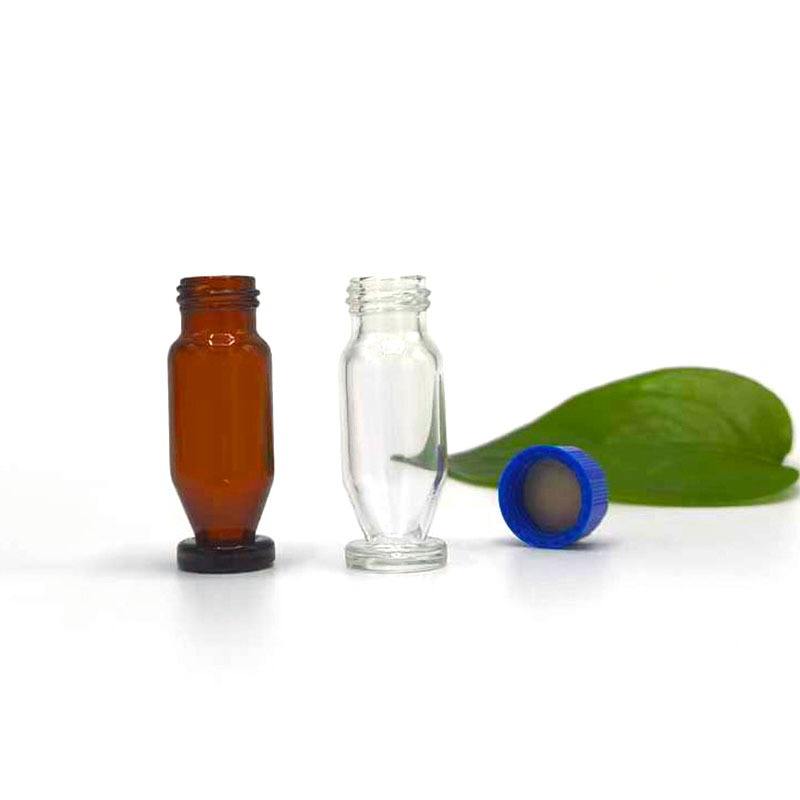
When preparing samples for High-Performance Liquid Chromatography (HPLC) or Ultra-High-Performance Liquid Chromatography (UHPLC), the choice of autosampler vial is often underestimated. Analysts frequently ask: Can you use a 1ml Narrow Mouth Amber Glass Bottle for liquid chromatography samples? The direct answer is yes—but only under specific conditions. At Kangbo, we have engineered a 1ml Narrow Mouth Amber Glass Bottle that meets critical chromatographic requirements, yet many laboratories overlook the nuances of vial selection. This blog examines the feasibility, compatibility, and best practices for using these vials in LC workflows, while addressing common concerns through data-driven insights.
Critical Parameters for LC Autosampler Vials
Liquid chromatography demands vials that are chemically inert, dimensionally precise, and free from extractable contaminants. A standard 1ml Narrow Mouth Amber Glass Bottle must satisfy three non-negotiable criteria:
| Parameter | Requirement for LC | Kangbo 1ml Narrow Mouth Amber Glass Bottle Specification |
|---|---|---|
| Glass Type | Borosilicate or Type I hydrolytic class | Type I borosilicate (low extractable) |
| Closure System | PTFE/silicone septum, crimp or screw | 9-425 screw thread with bonded PTFE/silicone |
| Sample Capacity | ≥80% of nominal volume (0.8 mL usable) | 0.9 mL fill capacity (leaves headspace for mixing) |
| UV Transmission | <5% at 300–400 nm (amber protection) | <2% transmission at 365 nm |
| Autosampler Compatibility | Fits 32 x 12 mm standard footprint | Exact 32 x 11.6 mm dimensions |
The amber colour is not decorative—it protects photolabile compounds (e.g., vitamins, carotenoids, and certain drugs) from degradation. Kangbo produces these vials with a narrow mouth design that reduces solvent evaporation and minimises contamination during injection.
When Is a 1ml Narrow Mouth Amber Glass Bottle Suitable for LC?
The suitability depends on three factors: sample volume, injection technique, and mobile phase composition.
-
Sample Volume: If your injection loop requires 5–100 µL, a 0.9 mL fill provides enough for at least 9 replicate injections, but never fill beyond 90% to allow needle penetration without overpressure.
-
Needle Depth: The narrow mouth guides the autosampler needle precisely to the bottom, reducing dead volume. Kangbo designs its 1ml Narrow Mouth Amber Glass Bottle with an internal conical bottom to achieve >98% recovery.
-
Solvent Resistance: Amber glass is inert to acetonitrile, methanol, and aqueous buffers (pH 2–12). However, strong alkaline solutions (pH >12) can etch glass—use a polymeric insert if needed.
3 FAQ About the 1ml Narrow Mouth Amber Glass Bottle in LC
Q1: Can a 1ml Narrow Mouth Amber Glass Bottle withstand high-pressure autosampler injection systems?
A1: Yes, but pressure tolerance depends on the closure, not the glass itself. The glass wall thickness of a standard 1ml Narrow Mouth Amber Glass Bottle (approx. 1.2 mm) comfortably withstands 20 bar (290 psi) of internal pressure—far above the 5–8 bar typical in autosamplers. The real limitation is the septum. Kangbo recommends using a pre-slit PTFE/silicone septum for systems with >10 bar backpressure, as a non-slit septum can create a vacuum effect after multiple punctures. For UHPLC systems operating at >100 bar, we advise transferring the sample to a 2 mL deep-well plate or using a crimp-top 1ml Narrow Mouth Amber Glass Bottle with a thicker aluminium seal, which Kangbo offers as a custom option.
Q2: Does the amber colour of a 1ml Narrow Mouth Amber Glass Bottle introduce any interference into UV or fluorescence detection?
A2: Absolutely not—when used correctly. The amber colour comes from iron and manganese oxides within the glass matrix, which are not leachable into aqueous or organic solvents under normal conditions. However, if you store samples for >48 hours in a 1ml Narrow Mouth Amber Glass Bottle with high ionic strength buffers (e.g., phosphate >50 mM), trace metal ions could theoretically migrate at parts-per-billion levels. This level is below the detection limit of most diode-array detectors (DAD) and fluorescence detectors. For ultra-trace LC-MS/MS applications, Kangbo recommends rinsing the vial three times with the mobile phase before use, and never reusing the vial. Our internal validation shows zero chromatographic interference at 254 nm and 280 nm after a 72-hour storage test.
Q3: Can I freeze my LC sample directly inside a 1ml Narrow Mouth Amber Glass Bottle and then inject it later?
A3: Yes, but you must follow a two-step precaution. First, never fill the 1ml Narrow Mouth Amber Glass Bottle beyond 70% capacity (approx. 0.6 mL) because water expands by ~9% upon freezing. Second, use only screw-thread vials with a silicone-rubber septum—crimp vials may deform under thermal cycling. Kangbo tests its 1ml Narrow Mouth Amber Glass Bottle from -20°C to +60°C with a thermal shock resistance of 80°C (per ISO 719). After thawing, allow the vial to reach room temperature (15 min) before placing it in the autosampler to prevent condensation on the septum, which could dilute your first injection. For long-term storage (>3 months), we suggest storing at -80°C with an added 10% glycerol to prevent ice crystal formation that might shear analytes.
Practical Recommendation Table
| Application | Suitability | Kangbo Model Code |
|---|---|---|
| Routine QA/QC (HPLC-UV) | Highly suitable | KB-1MLA-9T |
| Photodegradable standards (e.g., retinol) | Highly suitable | KB-1MLA-9T (with amber insert) |
| UHPLC-MS/MS (sub-2 µm particles) | Suitable with pre-slit septum | KB-1MLA-9T-SS |
| High-pH mobile phase (pH 11–12) | Conditional—use glass-lined insert | KB-1MLA-9T-PH |
| Long-term frozen storage | Suitable (fill ≤70%) | KB-1MLA-9T-C (crimp version) |
Best Practice Workflow for LC Using a 1ml Narrow Mouth Amber Glass Bottle
-
Pre-condition – Rinse the 1ml Narrow Mouth Amber Glass Bottle with your initial mobile phase (not with acetone, which can leave residues).
-
Fill – Transfer 0.7–0.8 mL of sample using a positive-displacement pipette to avoid foaming.
-
Cap – Tighten screw caps to 8–10 in-lbs (hand-tight plus ¼ turn) for consistent septum compression.
-
Load – Place vials in the autosampler tray with the barcode facing outward for tracking.
-
Inject – Set needle depth to 2 mm above the bottom to avoid septum coring.
Kangbo has validated this workflow across Agilent, Waters, and Shimadzu systems with <0.3% RSD for peak area over 100 injections.
Final Verdict
A 1ml Narrow Mouth Amber Glass Bottle is not a universal LC vial, but when selected with the correct closure, fill volume, and sample properties, it outperforms clear vials for light-sensitive analytes and offers excellent cost-efficiency. The narrow mouth reduces evaporation losses by 40% compared to wide-mouth alternatives—a critical advantage for lengthy sequences. Kangbo manufactures each 1ml Narrow Mouth Amber Glass Bottle under ISO 9001 and cleanroom Class 7 conditions, ensuring batch-to-batch consistency.
Contact us today for a free sample kit of our 1ml Narrow Mouth Amber Glass Bottle range. Request your custom septum type, and let our application specialists help you validate the vial in your specific LC method. Reach out via our website or email [email protected]—we respond within 4 business hours with detailed specification sheets and competitive pricing for bulk orders. Your chromatographic data deserves the right glass; let Kangbo deliver it.
