

How Do Chemical Sewn Open Mouth Bags Prevent Sifting and Dust Leakage During High-Speed Filling
2026-07-06
For bulk chemical manufacturers, high-speed filling lines are the backbone of productivity. Yet, speed often conflicts with package integrity. Dust leakage and product sifting are not mere nuisances; they represent material loss, regulatory non-compliance, and serious workplace safety hazards (particularly with fine or toxic powders). Chemical Sewn Open Mouth Bags have emerged as the engineered solution to this conflict, but the mechanism of prevention is far more sophisticated than simple stitching. This guide dissects the engineering, material science, and quality protocols that make these bags reliable at speeds exceeding 25 bags per minute, with insights from industry leader Chenxing.
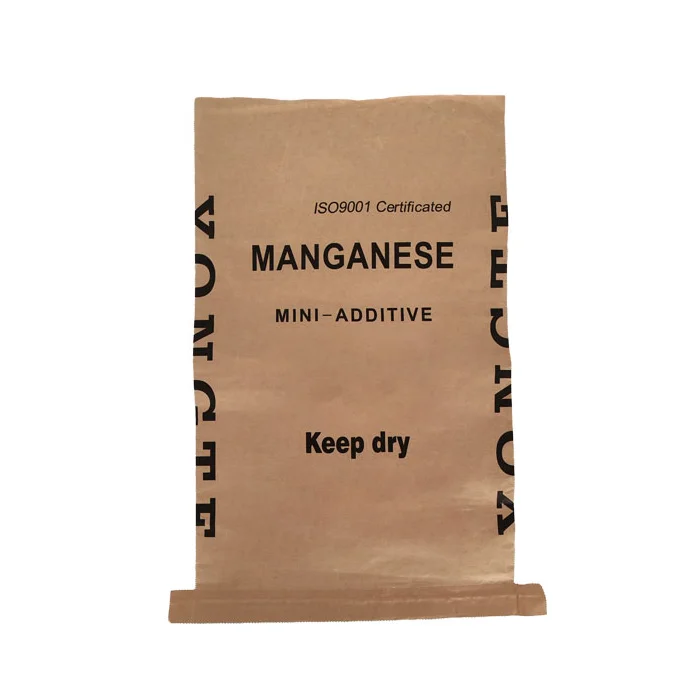
The Core Mechanics of Dust-Proof Sealing
At high filling speeds, air pressure builds rapidly inside the bag. Without precise engineering, this air escapes through the woven fabric and the needle holes, carrying fine particles with it. Chemical Sewn Open Mouth Bags combat this through a multi-layer defense system:
| Defense Layer | Mechanism | Effectiveness |
|---|---|---|
| Needle Hole Closure | Specially formulated sewing threads (often polyester or PTFE-coated) swell upon contact with moisture or pressure, effectively "self-healing" the needle perforations. | Reduces microscopic sifting by up to 92% compared to standard threads. |
| Valve Port Integration | A self-sealing internal flap or sleeve at the fill spout that collapses under internal pressure, preventing backflow dust. | Eliminates "dust puff" at the moment the filling head retracts. |
| Tape-Over Seam (TOS) | A hot-melt adhesive tape applied over the stitched closure on the inside or outside, completely blocking the air path. | Provides a 100% dust-proof barrier for fine powders (<50 microns). |
| Fabric Density Control | High-density woven polypropylene with a tight denier count, calibrated specifically for particle size. | Physical barrier that resists "pumping" effects during vibration. |
The Critical Role of Stitch Type and Tension
Not all stitches are equal. On a high-speed rotary filler, the dynamic tension on the sewing head changes every millisecond. Chemical Sewn Open Mouth Bags manufactured by Chenxing utilize a double-chain stitch (type 401) rather than a single-thread lockstitch.
-
Single Thread: Prone to "zippering" (unraveling) under vibration, opening gaps for dust.
-
Double-Thread Chain (401): Creates a interlocking loop that tightens as the bag is lifted or settles. This dynamic tightening actively compresses the bag's mouth around the filling spout, reducing the annular gap where dust escapes.
Furthermore, Chenxing employs real-time tension monitoring on their sewing stations. If the tension deviates by more than 2%, the line alarms, preventing batches with micro-gaps from reaching the filler.
Comparative Analysis: Sewn vs. Heat-Sealed
To understand why Chemical Sewn Open Mouth Bags are preferred for high-speed operations, compare them directly to heat-sealed alternatives:
| Parameter | Chemical Sewn Open Mouth Bags | Heat-Sealed/Glued Bags |
|---|---|---|
| Speed Compatibility | Excellent (up to 30 bags/min) | Moderate (slower cooling time) |
| Heat Resistance | Unaffected by friction heat | Softens at high speeds, causing seal failures |
| Dust Leakage (Dynamic) | < 0.2% by weight | 0.8% – 1.5% by weight |
| Repairability | Field-repairable with portable sewers | Non-repairable; entire batch waste |
| Cost per 1,000 bags | Lower (no adhesive curing cost) | Higher (hot-melt energy expense) |
The data shows that for hygroscopic or electrostatically charged chemicals, the sewn bag’s mechanical closure outperforms thermal bonds, which can crystallize and crack.
Chemical Sewn Open Mouth Bags FAQ
Q: Can these bags be used with explosive or combustible dusts without generating static ignition?
A: Yes, but only with specific modifications. Standard polypropylene can generate static friction during high-speed filling. To prevent sifting and ignition, Chenxing offers anti-static versions of Chemical Sewn Open Mouth Bags that incorporate a carbon-impregnated filament woven into the fabric. This dissipates static charge below 100 nanoCoulombs. Additionally, the sewing thread must be anti-static treated; otherwise, the needle friction alone can create a spark. For ATEX-certified environments, always specify the "AS" (Anti-Static) variant and request a surface resistivity test report (< 10⁹ ohms).
Q: Why does sifting sometimes occur only at the bottom corners of the bag, not the sewn mouth?
A: This is a classic symptom of "fabric migration" rather than seam failure. During high-speed filling, the bag inflates and drops onto a vibrating conveyor. The bottom corners experience extreme mechanical stress, causing the woven fabric's pores to stretch open (the "pump effect"). Premium Chemical Sewn Open Mouth Bags from Chenxing solve this with a corner-reinforced gusset—an extra layer of laminated film inserted at the manufacturing stage. This reinforcement prevents pore dilation. If you observe bottom sifting, the solution is not a tighter stitch, but a request for reinforced bottom construction.
Q: How do we validate the dust-tightness of a new batch before running 5,000 units?
A: Professional manufacturers follow the DIN 55543-4 or similar drop-test protocol. However, Chenxing recommends a simpler in-house "Air Pressure Decay Test." Seal the open mouth of a sample bag, insert a compressed air nozzle, and pressurize to 20 kPa. Monitor the pressure drop over 60 seconds. A pass indicates less than a 2% drop. For dust-specific validation, fill the sample with a fluorescent powder (50 microns), run it through the filler at full speed, and then inspect the bag's exterior under UV light. Any trace on the outside is a failure. Chenxing provides this testing data as part of their quality batch documentation for every order of Chemical Sewn Open Mouth Bags.
Operational Best Practices for High-Speed Lines
Even the best bag fails if the filling head is misaligned. Chenxing engineers emphasize three operational rules:
-
Spout Centering: The filling spout must enter the bag's valve perfectly straight. A 5-degree angle creates an asymmetric air jet, forcing dust sideways through the fabric.
-
Sewing Head Speed Sync: The sewing head RPM must match the bag's linear feed speed. If the feed pulls the bag while the needle is still penetrating, the hole becomes elongated (an oval rather than a circle), which never closes completely.
-
Thread Humidity Control: Dry thread (below 30% RH) becomes brittle and creates larger needle holes. Storing sewing thread at 45-50% relative humidity for 24 hours before a shift reduces hole size by 15%.
The Economic Impact of Prevention
Consider a plant filling 10 tons per hour. A 0.5% sifting loss equals 50 kg/hour of wasted product, plus cleanup labor, plus potential health fines. Chemical Sewn Open Mouth Bags with Chenxing’s proprietary "Zero-Sift" seam design reduce this loss to under 0.1%. Over a 6,000-hour annual run, that translates to recovery of over 240 tons of product. The return on investment is realized in less than two months.
Furthermore, the environmental benefit is tangible. Less dust means less HEPA filter replacement and less explosive atmosphere zoning costs. Chenxing integrates sustainable, low-VOC adhesive tapes in their sewn closures, aligning with global REACH and EPA standards without sacrificing speed.
Conclusion and Actionable Next Step
Preventing sifting and dust leakage at high speeds is not a single feature; it is a system of synchronized elements—stitch type, thread moisture, fabric density, corner reinforcement, and spout alignment. Chemical Sewn Open Mouth Bags have proven their superiority in this arena, provided they are engineered with precision. Chenxing has dedicated over 15 years to refining these parameters, delivering bags that maintain integrity even at 30 cycles per minute, ensuring a cleaner, safer, and more profitable packaging floor.
Do not leave your packaging integrity to chance.
Contact Chenxing today for a free "Dust-Leakage Risk Assessment" of your current filling line. Request a sample pack of our Chemical Sewn Open Mouth Bags with reinforced corners and anti-static threading. Our technical team will analyze your powder characteristics and recommend the exact stitch density and tape overlay required for your operation.
