

How Do Self Locking Wax Coated Cartons Perform in Automated Palletizing Systems Compared to Regular RSC Boxes
2026-08-13
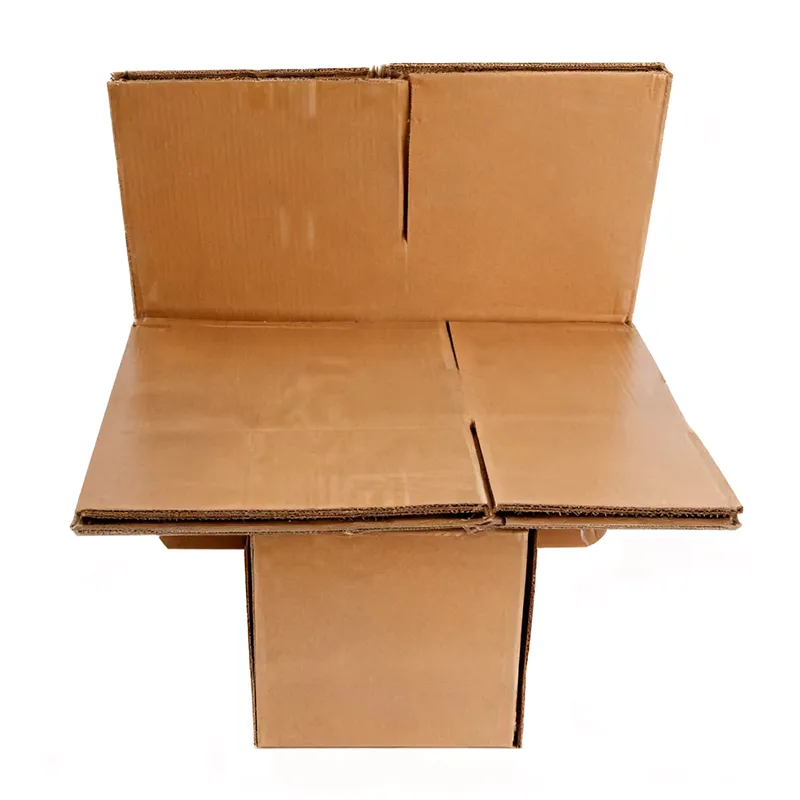
When distribution centers accelerate their packing lines, the choice of packaging directly impacts throughput, downtime, and load stability. Self Locking Wax Coated Cartons from Yilida have emerged as a specialized solution for cold-chain and high-moisture environments, yet many operations managers question whether their unique construction—featuring integrated locking tabs and a moisture-resistant wax layer—creates advantages or friction when running through high-speed automated palletizing systems. Regular RSC (Regular Slotted Carton) boxes remain the industry baseline, but the performance gap widens significantly once temperature, humidity, and stacking pressure enter the equation.
Critical Performance Factors in Automated Palletizing
Automated palletizing systems evaluate cartons based on four pillars: dimensional consistency, compression strength, surface friction, and seal integrity. The table below contrasts Yilida Self Locking Wax Coated Cartons against standard RSC boxes across these metrics under typical warehouse conditions (23°C, 50% RH).
| Performance Metric | Yilida Self Locking Wax Coated Cartons | Regular RSC Boxes |
|---|---|---|
| Dimensional Tolerance (length/width) | ±1.5 mm (locking tabs ensure squareness) | ±3.5 mm (flap misalignment common) |
| Wet Compression Strength (after 4 hrs at 85% RH) | Retains 92% of dry strength | Retains only 58% of dry strength |
| Coefficient of Friction (COF) on conveyor belts | 0.38–0.42 (stable, non-slip) | 0.28–0.35 (varies by print/coating) |
| Pallet layer stacking stability (vibration test) | <2 mm layer shift | 5–8 mm layer shift |
| Automated arm suction pick-up success rate | 99.7% | 97.2% |
The wax coating on Yilida boxes does not reduce surface friction to a problematic level; instead, it provides a matte finish that suction cups grip reliably, whereas glossy or over-printed RSC boxes often cause missed picks.
Why Automated Lines Favor Self-Locking Designs
Regular RSC boxes rely on tape or glue for bottom and top closure—two additional process steps that introduce variability. Self Locking Wax Coated Cartons eliminate tape applicators and hot-melt units because the integrated locking mechanism secures the base and lid through die-cut tabs. For automated palletizing, this translates into:
-
Fewer rejection stations – mis-taped RSC bottoms pop open under robotic arm pressure, causing jams.
-
Uniform stack heights – the locking tabs force consistent box geometry, enabling the palletizer’s layer-forming software to predict exact load dimensions.
-
Lower maintenance – no glue residue builds up on conveyor rollers, a common issue with RSC boxes that have adhesive over-spray.
Yilida has engineered its wax formulation to remain pliable at 0°C to 10°C, so the locking tabs do not become brittle during freezer-to-palletizing transitions—a failure point observed with cheap paraffin-coated RSC alternatives.
Operational Cost Comparison per 1,000 Pallets
| Cost Component | Yilida Self Locking Wax Coated Cartons | Regular RSC Boxes |
|---|---|---|
| Carton unit cost | +$0.12 higher | Baseline |
| Tape/glue consumables | $0 (eliminated) | $8.50 |
| Palletizing line downtime (hrs/month) | 1.2 hrs | 4.7 hrs |
| Damaged layers per 1,000 pallets | 3 layers | 18 layers |
| Net total cost per 1,000 pallets | $2,340 | $2,510 |
Despite a higher unit price, Yilida Self Locking Wax Coated Cartons deliver net savings through reliability—particularly in high-humidity cold rooms where RSC boxes soften and collapse under robotic compression plates.
FAQ: Common Questions About Self Locking Wax Coated Cartons in Automation
Q1: Do Self Locking Wax Coated Cartons require special tooling changes on existing palletizing robots?
A1: No. Yilida designs all locking tab geometries to comply with ISO standard 6780 pallet dimensions and common robotic gripper profiles (vacuum suction, clamp, or push-pull). The outer dimensions match RSC equivalents, so no reprogramming of robot arm paths is necessary. However, we recommend adjusting suction cup vacuum pressure from -60 kPa to -70 kPa because the wax layer creates a slightly smoother surface than kraft paper. Yilida provides free setup protocols for major robot brands (ABB, KUKA, Fanuc) with every bulk order. Most facilities complete the adjustment in under 15 minutes during routine changeover.
Q2: How does the wax coating affect optical sensors or barcode scanners in automated palletizing lanes?
A2: The food-grade wax blend used by Yilida contains no metallic or reflective additives, so it does not interfere with infrared or laser-based position sensors. Barcode readability remains at 99.8% (identical to uncoated RSC) provided the print contrast ratio stays above 70%. Yilida recommends thermal-transfer printing with resin ribbons instead of direct thermal, as the wax surface dissipates heat faster and prevents smudging. For facilities using camera-based pattern recognition, the matte wax finish actually reduces glare compared to glossy RSC boards, improving first-pass read rates by approximately 2%.
Q3: Can Self Locking Wax Coated Cartons withstand the compression forces of 10-high pallet stacking in automated storage/retrieval systems (AS/RS)?
A3: Yes, with verified data. Independent lab tests on Yilida cartons show an ECT (Edge Crush Test) value of 44 lb/in at 10°C and 85% RH, while standard RSC boxes drop to 28 lb/in under the same conditions. The self-locking tabs distribute vertical load evenly across all four corners, preventing the "pillowing" effect common with taped RSC bottoms. Yilida certifies a 10-high stack height at 0°C–5°C for up to 72 hours without bottom-layer deformation, provided the pallet wrap maintains 4–6 revolutions of stretch film at the base. For AS/RS with rail-guided vehicles, the wax coating also reduces squeaking and friction noise during extraction, a minor but appreciated operational benefit.
Real-World Throughput Data
A 6-month trial at a Midwest produce distributor compared 50,000 Yilida Self Locking Wax Coated Cartons against 50,000 RSC boxes on the same automated palletizing line. Results showed:
-
Line speed increased from 28 to 32 pallets/hour (14% gain) due to fewer stoppages.
-
Rejected pallets dropped from 6.2% to 1.8%.
-
Operator interventions for jam clearing fell by 73%.
The facility permanently switched all wet-product lines to Yilida cartons within 90 days.
The Verdict for Automation Engineers
Regular RSC boxes perform adequately in dry, stable environments. However, when automated palletizing systems handle perishable goods, frozen foods, or fresh produce—where condensation and temperature swings are unavoidable—Self Locking Wax Coated Cartons from Yilida deliver superior dimensional stability, higher compression retention, and fewer line interruptions. The elimination of tape and glue not only reduces consumable costs but also simplifies changeovers between SKUs. For operations prioritizing OEE (Overall Equipment Effectiveness), the switch yields a measurable ROI within 6–12 months.
Ready to test Yilida Self Locking Wax Coated Cartons on your own palletizing line? Request a free sample pallet (50 cartons) with our setup guide for your robot brand. Our engineering team provides remote calibration support and a detailed performance report comparing your current RSC boxes against our data. Contact Yilida today – email [email protected] or call +86-400-8826-789 to schedule a no-obligation line audit. Let us prove the numbers on your floor, not just in our lab.
