

How Does a Glassine Paper Bag Reduce Plastic Waste?
2026-09-24
Many food brands have committed to reducing single-use plastic packaging by 50 percent or more before 2030. The easiest targets are the small bags used for cookies, pastries, confectionery, and dry snacks. These bags are typically made from polypropylene (PP) or polyethylene (PE) film. They are lightweight, cheap, and provide a good moisture barrier. But they are also difficult to recycle, often contaminated with food residue, and increasingly banned in many jurisdictions. A 40gsm glassine paper bag is a direct replacement that eliminates the plastic while maintaining the barrier properties needed for short-shelf-life products. This guide explains the material properties and the practical considerations for switching.
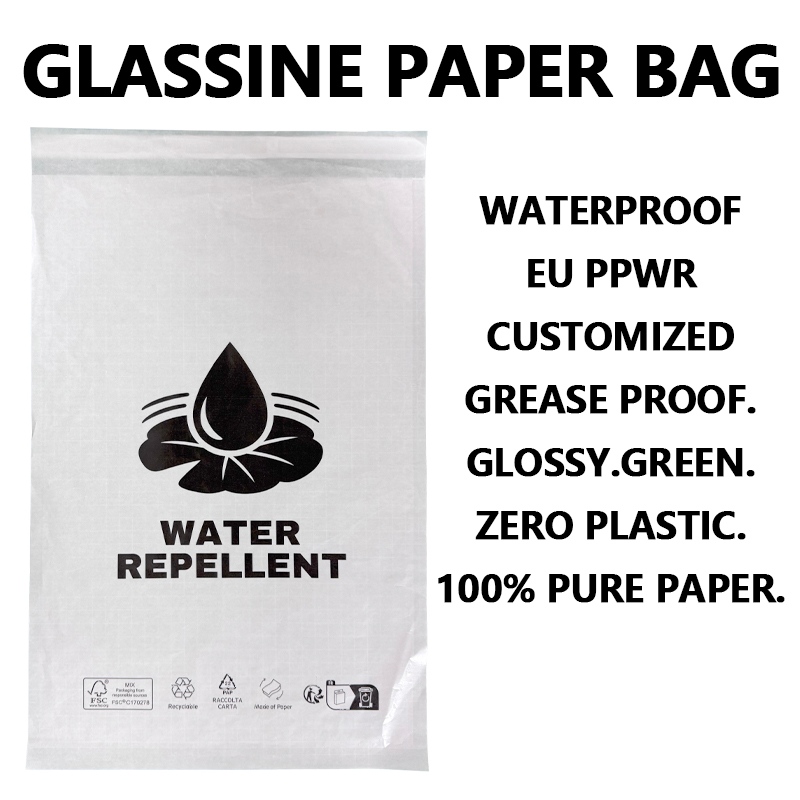
1. What Is a 40gsm Glassine Paper Bag and Why That Basis Weight?
Glassine is a smooth, glossy paper that is produced by supercalendering—a process that passes the paper through a series of polished rollers under high pressure. The result is a dense, transparent paper with excellent grease resistance and a high degree of moisture resistance compared to standard paper. The basis weight of 40gsm is the most common specification for small food bags because it provides the best balance between strength and flexibility. A lighter weight (30gsm) may tear during filling; a heavier weight (50gsm) is stiffer and more expensive without a significant performance benefit for most bakery items. The table below shows the properties of 40gsm glassine compared to other common bag materials.
| Property | 40gsm glassine paper | PP film (30 micron) | PE film (30 micron) | Kraft paper (40gsm) |
| Grease resistance (Kit rating) | 8 – 10 | 1 – 3 | 1 – 3 | 3 – 5 |
| Moisture vapor transmission rate (g/m²/day) | 15 – 25 | 5 – 8 | 8 – 12 | 80 – 120 |
| Compostability (home) | Yes (TÜV OK compost) | No | No | Yes (but slower) |
| Recyclability (paper stream) | Yes | No | No | Yes |
| Relative cost per bag | Moderate | Low | Low | Low to moderate |
In our factory, we produce 40gsm glassine paper bags in a range of sizes and styles, including flat bags, gusseted bags, and bags with glassine windows. The paper is FSC-certified and can be printed with water-based inks for branding. Zeal X International Limited has been supplying glassine packaging to food brands for over 12 years and can advise on the right specification for each product type.
2. How Does Glassine Compare to Plastic Film in Terms of Product Protection?
Glassine is not a perfect replacement for plastic film in all applications. It has a higher moisture vapor transmission rate (MVTR) than PP or PE film, which means it does not provide the same long-term moisture barrier. For products with a shelf life of less than 4 weeks, the difference is negligible. For products with a shelf life of 6 months or more, plastic film is still superior. However, for bakery items, confectionery, and dry snacks that are consumed quickly, glassine provides adequate protection. Its grease resistance is actually better than plastic film, which makes it ideal for products that contain oils or fats. The table below shows the recommended shelf life for glassine bags compared to plastic film bags for different product types.
| Product type | Recommended shelf life with glassine | Recommended shelf life with PP film | Glassine suitable? |
| Cookies (dry, low fat) | 3 – 4 weeks | 6 – 8 weeks | Yes |
| Pastries (high fat) | 1 – 2 weeks | 2 – 3 weeks | Yes (better grease resistance) |
| Candy (hard) | 8 – 12 weeks | 16 – 24 weeks | Yes (if humidity is controlled) |
| Dried fruit | 4 – 6 weeks | 12 – 16 weeks | Moderate (use with inner liner) |
| Chips (fried) | 1 – 2 weeks | 8 – 12 weeks | No (needs high moisture barrier) |
For products that require a longer shelf life, we offer a glassine bag with a thin compostable PLA inner liner. This hybrid structure provides a better moisture barrier while still being compostable. Our factory can produce these bags with the same printing and converting options as the standard glassine bag.
3. What Are the Regulatory Drivers for Switching from Plastic to Glassine?
The regulatory pressure on single-use plastic packaging is increasing in every major market. The European Union's Single-Use Plastics Directive bans certain plastic items and requires that all packaging be reusable or recyclable by 2030. In the United States, several states have enacted extended producer responsibility (EPR) laws that impose fees on plastic packaging. In Canada, the government has proposed a ban on certain single-use plastics. Glassine paper bags help brands comply with these regulations because they are recyclable in the paper stream and compostable in home composting systems. They are also exempt from many plastic taxes and fees. The table below summarizes the regulatory status of glassine compared to plastic film in key markets.
| Market | Glassine paper bag | PP/PE film bag |
| EU (Packaging and Packaging Waste Regulation) | Recyclable, compostable | Subject to EPR fees, recyclability challenges |
| USA (state EPR laws) | Exempt or low fee | Higher fee, reporting requirements |
| Canada (Single-Use Plastics Prohibition) | Not banned | Certain items banned |
| UK (Plastic Packaging Tax) | Exempt | Tax applies if recycled content < 30% |
| Australia (National Packaging Targets) | Compostable, recyclable | Subject to phase-out |
Zeal X International Limited provides documentation to support our customers' compliance with these regulations. We provide FSC certificates, compostability certificates (TÜV OK compost HOME), and recyclability statements. We also provide a carbon footprint calculation for the glassine bags compared to plastic film bags.
4. What Are the Practical Steps for Transitioning to Glassine Bags?
The transition from plastic to glassine requires four steps. First, evaluate the product. Determine the required shelf life, grease resistance, and moisture barrier. If the product is high in fat or has a long shelf life, glassine may not be suitable without an inner liner. Second, select the bag style. Flat bags are the most economical. Gusseted bags allow for larger items. Window bags are useful for products that need to be visible. Third, test the filling process. Glassine is less elastic than plastic film, so the filling equipment may need adjustment. The bag opening may need to be wider to accommodate the product. Fourth, validate the shelf life. Perform an accelerated shelf life test with the glassine bag to confirm that the product meets the required quality standards. In our factory, we provide sample bags for trial runs and can assist with the shelf life testing protocol.
Frequently Asked Questions About Glassine Paper Bags and Plastic Reduction
Summary for Packaging Sourcing Managers
A 40gsm glassine paper bag is a practical replacement for plastic film bags in many food applications. It provides good grease resistance, adequate moisture protection for short-shelf-life products, and full compostability and recyclability. It helps brands comply with increasing regulations on single-use plastic. The transition requires careful evaluation of the product, the filling process, and the shelf life, but the result is a packaging solution that meets both sustainability goals and product protection requirements. Zeal X International Limited has been supplying glassine packaging for over 12 years and can support every step of the transition.
Zeal X International Limited manufactures 40gsm glassine paper bags in a range of sizes and styles, with FSC-certified paper and compostable inks. We provide samples, shelf life testing support, and regulatory documentation.
