

How Does a Powder Filling Machine Improve Powder Packaging Efficiency?
2026-08-25
Article Summary: Powder products are notoriously difficult to package consistently because their density, particle size, flowability, and moisture sensitivity can vary significantly. A properly configured Powder Filling Machine can address these challenges by controlling powder dosing, improving filling consistency, reducing material loss, and supporting faster production. This article explains how powder filling equipment works, which factors affect filling accuracy, how to select the right machine, and how manufacturers can build a more reliable packaging process.
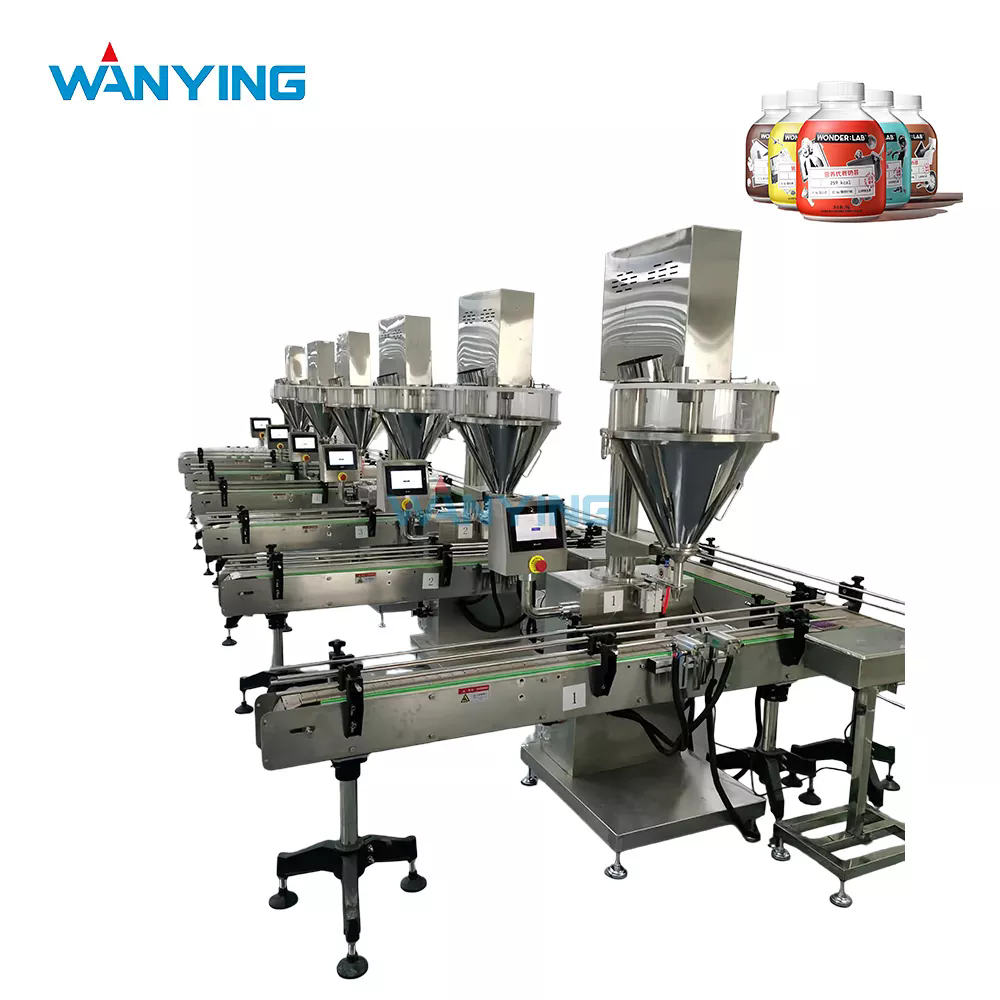
Table of Contents
- Article Outline
- Why Powder Filling Is More Difficult Than Liquid Filling
- How a Powder Filling Machine Works
- How Filling Accuracy Is Achieved
- Key Benefits of Automated Powder Filling
- How Powder Characteristics Affect Machine Performance
- Which Packaging Formats Can Be Used
- Common Applications
- How to Select the Right Powder Filling Machine
- Maintenance and Cleaning Considerations
- Integrating Powder Filling Into a Complete Production Line
- Typical Technical Considerations
- Frequently Asked Questions
- Conclusion
Article Outline
- Understand the practical problems associated with powder dosing.
- Learn the basic operating principle of powder filling equipment.
- Identify the variables that influence filling accuracy.
- Compare the benefits of automated powder packaging.
- Evaluate material, container, capacity, and automation requirements.
- Understand cleaning, maintenance, and production-line integration.
- Use practical criteria when choosing a suitable machine supplier.
Why Powder Filling Is More Difficult Than Liquid Filling
Powder packaging may look simple from the outside: a certain quantity of material needs to enter a container, after which the container can be sealed and labeled. In actual production, however, powder behavior can make accurate dosing considerably more complicated.
Unlike many liquids, powders do not always flow in a predictable manner. Two batches of the same product can have different bulk densities, while changes in particle size, moisture content, temperature, and storage conditions may alter how the material moves through the feeding system.
Common production problems include:
- Inconsistent filling weights from container to container.
- Powder accumulation around the filling area.
- Bridging or poor material flow inside the hopper.
- Excessive product waste during manual filling.
- Slow production caused by repeated weighing and adjustment.
- Difficulty changing between different package sizes.
- Long cleaning times when changing products.
These issues can directly affect production costs and product presentation. For food, nutritional, seasoning, coffee, flour, and similar products, consistent filling is particularly important because the final package must contain the intended quantity while maintaining an efficient production rate.
This is where a dedicated Powder Filling Machine becomes valuable. Instead of depending entirely on manual scooping or inconsistent gravity feeding, the machine uses a controlled metering mechanism to deliver a predetermined quantity of powder.
How a Powder Filling Machine Works
The basic operating sequence combines product feeding, metering, container positioning, dosing, and discharge. Although machine configurations vary according to the product and packaging requirements, the overall process follows a logical sequence.
- Powder feeding: The material is loaded into the hopper or feeding system.
- Material conditioning: The powder is guided toward the metering mechanism to maintain stable feeding.
- Metering: A controlled auger or screw mechanism measures the required volume of powder.
- Container positioning: The bottle, jar, can, pouch, or other package is placed beneath the filling outlet.
- Dosing: The programmed amount is discharged into the container.
- Parameter adjustment: Filling settings can be modified according to the product and package specification.
- Downstream processing: Filled containers can proceed to capping, sealing, labeling, coding, or other packaging operations.
A servo-driven auger system is particularly useful because screw rotation can be controlled to regulate powder delivery. The appropriate settings depend on the powder's physical characteristics and the target filling quantity.
Modern equipment can also use a PLC and touchscreen interface, allowing operators to manage filling parameters and simplify production changes. This is especially useful for manufacturers handling several products or package sizes.
How Filling Accuracy Is Achieved
Filling accuracy is not determined by the machine alone. It results from the interaction between the metering mechanism, powder characteristics, machine settings, container design, and operating conditions.
A practical filling system should therefore be configured around the actual material rather than selected solely according to nominal machine capacity.
| Factor | Potential Effect | Recommended Consideration |
|---|---|---|
| Bulk density | Changes the amount of material delivered per screw rotation | Test the actual powder before final configuration |
| Particle size | Influences flow and screw feeding behavior | Evaluate the complete particle distribution |
| Moisture | May cause sticking or poor flow | Maintain appropriate storage and production conditions |
| Target fill weight | Determines the appropriate metering range | Choose a machine that covers the required filling range |
| Container geometry | Can influence positioning and powder settling | Check container dimensions and opening size |
| Production speed | Affects cycle time and required automation | Match machine capacity with actual production demand |
For example, a fine powder may behave differently from a free-flowing granular material even when both products have the same target filling weight. Testing and commissioning are therefore important steps before putting equipment into continuous production.
Key Benefits of Automated Powder Filling
1. More Consistent Product Quantities
One of the main reasons manufacturers invest in automated filling equipment is to improve consistency. Controlled metering reduces the variation associated with manual filling and helps production teams maintain a more repeatable filling process.
2. Reduced Material Waste
Overfilling every container by even a small amount can create significant losses when production volumes are high. Controlled dosing helps manufacturers minimize unnecessary product giveaway while maintaining the desired filling specification.
3. Higher Production Efficiency
Manual weighing and filling require operators to repeat the same tasks throughout the shift. Automation can perform repetitive dosing cycles much faster and with less operator intervention, allowing employees to focus on supervision, quality checks, material preparation, and other higher-value activities.
4. Easier Product Changeovers
Manufacturers often produce multiple package sizes or powder products on the same production line. Programmable settings can make parameter changes more manageable, reducing downtime between production runs.
5. Better Production Control
A PLC-based control system provides a centralized interface for operating the machine. Operators can manage production parameters more systematically than with purely manual equipment.
6. Easier Integration
A powder filling machine does not have to operate as an isolated unit. Depending on the production requirements, it can become part of a broader automated packaging line that includes bottle handling, capping, labeling, coding, and cartoning equipment.
How Powder Characteristics Affect Machine Performance
The most important mistake when selecting powder filling equipment is treating every powder as if it behaved identically.
Powders can differ substantially in:
- Particle size and distribution.
- Bulk density.
- Flowability.
- Moisture content.
- Stickiness.
- Compressibility.
- Electrostatic behavior.
- Tendency to form bridges or lumps.
Fine powders may require careful control of feeding and discharge to prevent dust generation and unstable flow. Products with poor flowability may require an appropriate agitation or feeding arrangement. Products that absorb moisture easily require suitable environmental and storage controls.
Consequently, machine selection should begin with a material assessment. A supplier should understand what the product is, how it behaves, the target filling quantity, and the desired production rate before recommending a final configuration.
Which Packaging Formats Can Be Used
Powder products are sold in many different package formats. A flexible filling system can help manufacturers serve multiple market segments without investing in completely separate equipment for every package.
| Package Type | Typical Use | Important Consideration |
|---|---|---|
| Plastic bottles | Supplements, food powders, nutritional products | Container opening and stability |
| Glass jars | Coffee, spices, premium food products | Precise positioning and handling |
| Composite cans | Powdered beverages and food products | Container dimensions and sealing process |
| Stand-up pouches | Seasonings, ingredients, nutritional products | Opening geometry and pouch stability |
| Pre-made containers | Specialty packaging applications | Compatibility with upstream and downstream equipment |
The final configuration should be confirmed using the actual packaging material and container dimensions. This avoids problems caused by assuming that all containers will behave identically during automated handling.
Common Applications
A Powder Filling Machine can be used across many industries where dry, powdered materials need to be portioned consistently.
- Milk powder: Suitable for controlled filling into bottles, cans, or other food packages.
- Coffee powder: Helps improve dosing consistency for packaged coffee products.
- Protein powder: Supports repeatable filling for sports nutrition and nutritional products.
- Flour: Provides controlled dosing for packaged baking ingredients.
- Starch: Can be handled using an appropriate screw metering configuration.
- Seasoning powder: Useful for spices, seasoning blends, and dry food additives.
- Baking ingredients: Supports consistent portioning for commercial food production.
- Nutritional powders: Can help manufacturers manage repeatable package quantities.
Other compatible non-food powder applications may also be possible when the material properties, contact-material requirements, and machine configuration are appropriately evaluated.
How to Select the Right Powder Filling Machine
Choosing equipment based only on price can create problems later. A machine that appears inexpensive may not provide the required accuracy, capacity, flexibility, or compatibility with the existing production line.
Before purchasing, manufacturers should evaluate the following factors.
1. Filling Range
Determine the minimum and maximum quantities that need to be filled. A machine with an appropriate working range provides greater flexibility when product specifications change.
2. Required Capacity
Calculate the actual number of containers that must be filled per minute or per hour. Avoid selecting capacity solely from an ideal production target; consider changeovers, cleaning, material loading, and normal operating interruptions.
3. Powder Properties
Provide the supplier with representative material samples or detailed product information whenever possible. The same filling mechanism may perform differently with different powders.
4. Container Specifications
Container height, diameter, opening size, material, and shape can all affect the feeding and positioning system.
5. Contact Materials
For food applications, product-contact components should be manufactured from suitable materials. Wanying's powder filling equipment uses food-grade SUS304 for product-contact components, with SUS316 available as an option according to application requirements.
6. Automation Requirements
Determine whether the machine will be operated independently or integrated into a complete packaging line. This decision affects conveyor systems, sensors, control interfaces, and downstream equipment.
7. Cleaning Requirements
If multiple products are processed on the same equipment, cleaning and changeover should be considered from the beginning. Easily accessible product-contact components can reduce maintenance effort and help establish a more practical sanitation routine.
Maintenance and Cleaning Considerations
Even a well-designed filling machine requires regular maintenance. Powder can accumulate around moving components, hoppers, screw mechanisms, sensors, and discharge areas if cleaning is neglected.
A practical maintenance program should include:
- Routine inspection of the auger and feeding components.
- Cleaning of product-contact surfaces after the required production cycles.
- Inspection of sensors and electrical connections.
- Checking fasteners and moving parts for abnormal wear.
- Verification of filling parameters after maintenance.
- Inspection of seals and other wear components.
- Regular removal of accumulated powder from accessible machine areas.
Cleaning requirements vary according to the powder being processed. Sticky, oily, hygroscopic, or extremely fine materials may require more frequent attention than relatively free-flowing powders.
Quick disassembly of relevant product-contact components can make routine cleaning more manageable and can reduce the time required between product batches.
Integrating Powder Filling Into a Complete Production Line
For growing manufacturers, the goal is often not simply to automate one filling operation but to improve the complete packaging workflow.
A typical automated process may include:
Container feeding → container unscrambling → powder filling → capping/sealing → labeling → coding → inspection → cartoning
Integration can reduce manual handling between individual operations. It can also make production flow easier to monitor and improve the overall consistency of the packaging process.
For example, a powder filling machine can be connected with a bottle unscrambler to automatically prepare containers before filling. After dosing, filled containers can move to a capping machine, followed by labeling and coding equipment.
The appropriate arrangement depends on production capacity, container design, factory layout, available floor space, and the required level of automation.
Typical Technical Considerations
The following specifications illustrate the type of parameters manufacturers should examine when evaluating powder filling equipment:
| Specification | Example Consideration |
|---|---|
| Filling range | Approximately 10–5000 g, depending on configuration |
| Filling accuracy | Approximately ±1%, depending on powder properties |
| Production capacity | Approximately 15–60 containers per minute |
| Filling mechanism | Servo-controlled auger metering |
| Packaging formats | Bottles, jars, cans, pouches, and other compatible containers |
| Control system | PLC with touchscreen interface |
| Contact material | Food-grade SUS304; SUS316 can be considered for selected applications |
| Power supply | Can be configured according to applicable local standards |
These figures should be treated as equipment-selection references rather than universal performance guarantees. Actual filling performance depends on powder characteristics, container design, filling quantity, machine configuration, and operating conditions.
Frequently Asked Questions
Can one Powder Filling Machine handle different powder products?
Yes, provided the materials are compatible with the machine configuration. Different powders may require different auger settings, filling speeds, feeding parameters, and cleaning procedures. Production parameters can be adjusted according to powder density, particle characteristics, and target filling quantities.
Can fine powder be filled automatically?
Yes. Fine powders can be handled by appropriately configured auger filling systems. However, fine powders can behave differently from free-flowing materials, so actual product testing and suitable parameter adjustment are important for stable performance.
What determines Powder Filling Machine accuracy?
Accuracy depends on several factors, including powder density, particle size, flowability, moisture, filling quantity, auger configuration, machine settings, and container conditions. Therefore, the stated machine accuracy should always be evaluated together with the actual material being filled.
Can the machine fill both small and large quantities?
Some machines can cover a relatively broad filling range through appropriate metering configurations and parameter adjustments. Manufacturers should provide their actual minimum and maximum filling requirements before equipment selection.
Can the machine be integrated with other packaging equipment?
Yes. A powder filling machine can be integrated with equipment such as bottle unscramblers, capping machines, labeling systems, coding equipment, inspection systems, and automatic cartoning equipment when the interfaces and production requirements are properly coordinated.
Is stainless steel important for food powder filling?
Yes. Suitable stainless-steel contact surfaces are widely used in food-processing machinery because they provide a practical combination of durability, cleanability, and corrosion resistance. The exact material specification should be selected according to the product and applicable requirements.
How often should powder filling equipment be cleaned?
Cleaning frequency depends on the powder, production schedule, hygiene requirements, and whether different products are processed on the same machine. Manufacturers should establish a documented cleaning procedure based on their actual production conditions.
Does Wanying provide customized powder filling solutions?
Yes. Hubei Wanying Machinery Co., Ltd. develops filling solutions according to factors such as powder properties, package size, required production capacity, factory layout, and automation requirements. Its manufacturing and engineering capabilities are intended to support both individual filling equipment and broader packaging-line requirements.
Conclusion
A reliable Powder Filling Machine can solve several recurring problems in powder packaging, from inconsistent dosing and excessive product waste to low production efficiency and difficult changeovers. However, the best results come from matching the machine configuration to the actual powder, container, production target, and factory environment.
For manufacturers evaluating new equipment, the most important considerations are not simply machine speed or purchase price. Filling range, dosing method, powder behavior, accuracy requirements, packaging format, sanitation, maintenance, automation level, and after-sales technical support all contribute to the long-term value of the equipment.
Hubei Wanying Machinery Co., Ltd. provides powder filling equipment designed around practical production requirements, with configurable filling parameters, servo auger dosing, PLC touchscreen control, food-grade contact materials, and options for integration with other packaging machinery. The company also provides engineering and technical support for customers requiring customized production solutions.
If you are planning to automate powder packaging, improve filling consistency, increase production capacity, or develop a complete packaging line, contact us with your powder characteristics, target filling weight, container specifications, and expected production capacity. Hubei Wanying Machinery Co., Ltd. can help you evaluate a suitable Powder Filling Machine configuration for your application.
