

How Does Glassine Paper Support Sustainable Packaging Goals?
2026-11-16
A packaging buyer is asked to reduce the environmental footprint of a bakery line without losing the premium look of the current bag. The current bag is a PE coated paper bag that feels smooth and resists grease, but it cannot be recycled in the paper stream and it carries a higher extended producer responsibility fee. The buyer evaluates a 40gsm glassine paper bag as an alternative. The bag is transparent, smooth, and lighter, and it is made from cellulose without a synthetic coating. The question is whether it meets the four sustainability goals that the brand has committed to: recyclability, source reduction, compostability, and verification. This guide examines each goal and the limits of the material.
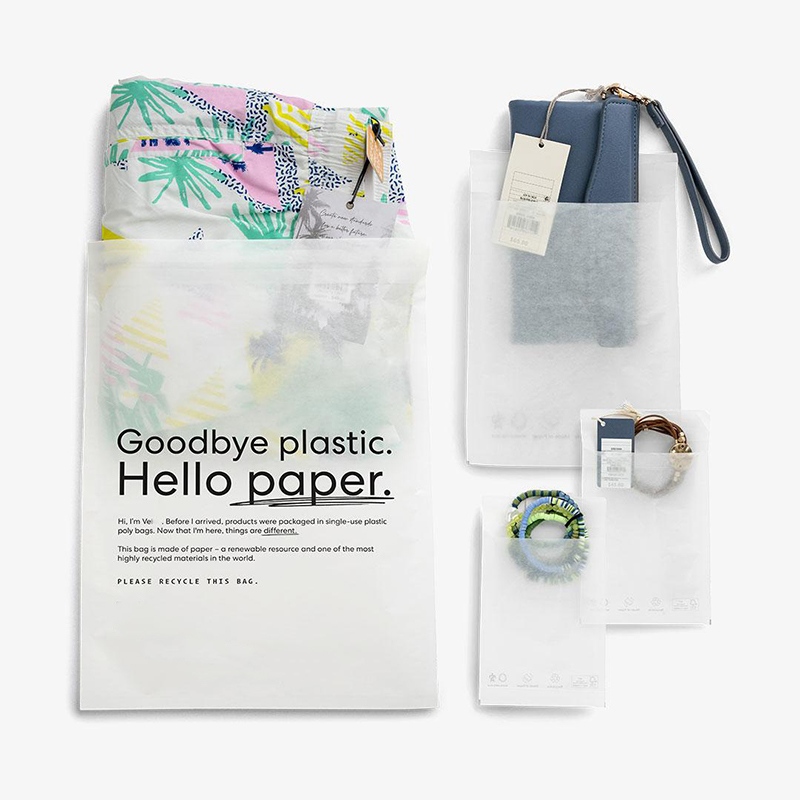
1. Why Does a 40gsm Glassine Paper Bag Fit the Recyclability Goal Better Than Coated or Laminated Bags?
The recyclability goal is about keeping the material in a recovery stream that actually exists. A 40gsm glassine paper bag is made from wood pulp that has been beaten and calendered. The material is cellulose, with no polyethylene film and no aluminum foil. It can be repulped in the same hydropulper that processes office paper and cardboard. The adhesive used on the bottom seam is water based, so it disperses in the repulping water instead of forming sticky lumps. A PE coated bag, by contrast, must be separated before the paper can be repulped, and most recycling facilities do not have the separation step. In our factory, we supply 40gsm glassine paper bag units with a water based adhesive and a paper recycling mark. Zeal X International Limited has been producing glassine packaging for over 10 years.
The recyclability also depends on the ink. A water based ink with no heavy metals does not contaminate the repulped fiber. A solvent based ink or a metallic ink can leave residue that lowers the quality of the recycled pulp. We recommend that the buyer specify water based ink and request the ink declaration with the order. The table below compares the recovery route for four common bag materials.
| Bag material | Main component | Paper recovery route | Separation before recycling |
| 40gsm glassine paper | Cellulose | Compatible | No |
| PE film bag | Polyethylene | Not compatible | Not applicable |
| PE coated paper bag | Cellulose and PE film | Limited | Yes |
| Aluminum laminated bag | Cellulose, foil, adhesive | Not compatible | Yes |
2. How Does the 40gsm Grade Balance Strength and Source Reduction?
Source reduction means using less material for the same function. The 40gsm grade is a common choice for bakery and confectionery bags because it provides enough tensile strength and tear resistance for a 500 gram to 1 kilogram load while keeping the bag light. A heavier 60gsm or 80gsm glassine would be stronger, but it would use more fiber and would increase the shipping weight. A lighter 30gsm glassine would reduce the material further, but it would be too fragile for a bag with a bottom gusset that must stand on a counter. In our factory, we test the tensile strength and the tear resistance of every 40gsm glassine paper bag lot. The typical values are 3.5 kilonewtons per meter in the machine direction and 2.0 kilonewtons per meter in the cross direction. Zeal X International Limited can provide the test report with each shipment.
The source reduction also comes from the bag design. A flat bag uses less material than a bag with a bottom gusset, but it cannot stand upright. The bottom gusset uses a small amount of extra paper, but it improves the presentation and reduces the need for a secondary display tray. The net material use across the packaging system can therefore be lower with the gusset than without it. The table below shows the typical parameters of the 40gsm grade and the effect on the bag performance.
| Parameter | Typical value for 40gsm glassine | Effect on bag performance |
| Grammage | 40 grams per square meter | Balances strength and material use |
| Thickness | 0.04 millimeters | Transparent, flexible, light |
| Tensile strength, machine direction | 3.5 kilonewtons per meter | Resists tearing when loaded |
| Tensile strength, cross direction | 2.0 kilonewtons per meter | Resists tearing at the gusset fold |
| Air resistance | High (low porosity) | Slows moisture loss and staling |
Packaging engineer's note: The 40gsm grade is not the lightest glassine available, but it is the lightest grade that holds a bottom gusset without collapsing when the bag is filled. A lighter grade would require a thicker gusset reinforcement, which would offset the material saving. In our factory, we recommend the 40gsm grade for bags up to 1 kilogram and the 50gsm grade for bags up to 2 kilograms. Zeal X International Limited reviews the load and the bag dimensions before recommending the grade.
3. Why Does Compostability Depend on the Full Bag Construction and Not Just the Paper?
Compostability is a property of the whole package, not of the paper alone. The 40gsm glassine paper bag is made of cellulose, which is biodegradable, but the bag also contains adhesive, ink, and sometimes a window or a handle. Each of these components must meet the compostability criteria. The EN 13432 standard requires that the packaging disintegrates within 12 weeks and biodegrades within 6 months under industrial composting conditions, and that the heavy metal content is below the limit. A water based adhesive and a water based ink with no heavy metals will pass the criteria. A hot melt adhesive or a solvent based ink may not. In our factory, we use a water based adhesive and a water based ink for all compostable glassine bags, and we provide the component declaration with the certification. Zeal X International Limited can arrange a third party compostability test if the buyer requires it.
The compostability also depends on the bag thickness. A thicker bag takes longer to disintegrate, and a 40gsm bag is at the thinner end of the range, so it disintegrates faster than a 60gsm or 80gsm bag. The bottom gusset fold creates a double layer at the base, which is the slowest part to break down, but the fold is narrow and does not extend the overall disintegration time beyond the standard limit. We recommend that the buyer specify the industrial composting route rather than the home composting route, because the industrial route has a controlled temperature and a controlled microbial community that give a reliable result.
4. What Limits Glassine Paper in Barrier Applications, and How Should Engineers Work Around Them?
Glassine paper has good grease resistance and good aroma retention, but it has limited moisture barrier. It absorbs water and loses strength when wet, and it does not stop water vapor transmission. A 40gsm glassine paper bag is therefore suitable for dry bakery items, confectionery, and tea, but not for wet or frozen food. The bag also has limited heat sealability. The bottom gusset is glued, not heat sealed, and the glue must be compatible with the compostability requirement. In our factory, we work around these limits by combining the glassine bag with an inner liner when a moisture barrier is required. The liner can be a compostable film or a wax paper, and the combination is tested as a system. We also recommend that the buyer test the bag with the actual product under the actual storage conditions before committing to a large order.
The barrier limit is not a failure of the material. It is a design constraint that must be matched to the application. A bag that is asked to do more than its barrier allows will fail in service, and the failure will be blamed on the material rather than on the specification.
5. How Should Buyers Verify Sustainability Claims for a 40gsm Glassine Paper Bag Order?
The buyer should verify four documents before accepting the order. The first is the material declaration, which states the grammage, the coating status, and the fiber source. The second is the adhesive and ink declaration, which states the chemistry and the heavy metal content. The third is the compostability certificate, if the buyer is making a compostable claim. The fourth is the batch traceability record, which links the delivered bag to the paper lot and the adhesive lot. In our factory, we provide all four documents with each order. We also keep a retained sample from each lot for 24 months so that a claim can be checked against the original bag. Zeal X International Limited recommends that the buyer avoid the unqualified term "biodegradable" and use "industrially compostable" or "recyclable" only when the certificate supports the claim.
The verification should also include a functional test. The buyer should fill the bag with the actual product, store it under the actual conditions, and check the bag after 7 days. A bag that tears at the gusset or loses its transparency is not suitable, even if the sustainability documents are in order. The functional test and the document review together give a complete picture.
Frequently Asked Questions About Glassine Paper and Sustainable Packaging
Glassine paper supports sustainable packaging goals because it is cellulose based, compatible with the paper recycling stream, and compostable when the full bag construction uses water based adhesive and ink. The 40gsm glassine paper bag balances strength and source reduction for dry bakery and confectionery products. The material has barrier limits, and it should not be used for wet or frozen food without a liner. The buyer should verify the material, adhesive, ink, and compostability documents, and should run a functional test with the actual product. When the material is matched to the application, glassine paper delivers a recyclable, compostable, and premium package.
