

How Does Platinum Offset Cold Foil Improve Print Quality on Offset Presses
2026-11-06
Platinum Offset Cold Foil has become a preferred finishing solution for printers seeking premium metallic effects without the cost and complexity of hot foil stamping. At Hongye, we have engineered our Platinum Offset Cold Foil to integrate seamlessly with standard offset workflows, delivering sharp detail, consistent transfer, and superior adhesion across a wide range of substrates. This article explains the technical mechanisms behind the quality gains and what pressrooms should expect in practice.
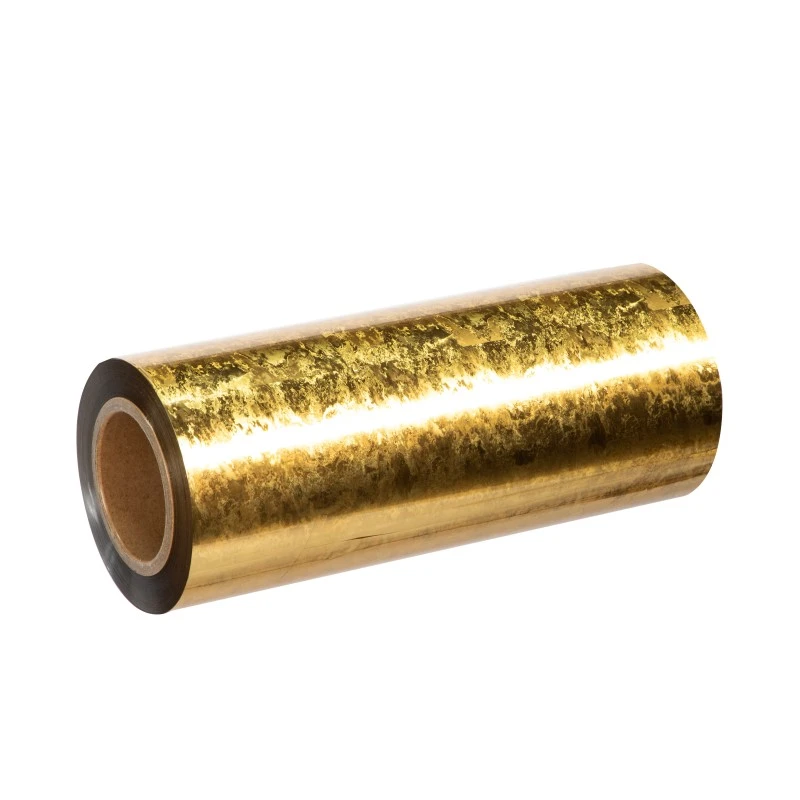
Why Platinum Offset Cold Foil Elevates Print Quality
Cold foil transfer relies on a UV-curable adhesive printed inline, followed by foil application and curing. The quality outcome depends on adhesive precision, foil release characteristics, and press consistency. Hongye optimizes each layer of the Platinum Offset Cold Foil structure to reduce common defects.
Key quality improvements:
-
Finer detail resolution — High-release liner and thin transfer layer allow halftones, fine type, and intricate linework to transfer cleanly, supporting resolutions down to 150–200 lpi depending on substrate and adhesive.
-
Reduced pinholes and skips — Uniform adhesive wet-out and optimized foil tension minimize voids in solid areas.
-
Better registration consistency — Stable dimensional behavior of the foil carrier keeps registration tight across long runs.
-
Superior overprint adhesion — The treated transfer surface accepts subsequent offset inks and UV coatings without de-inking or scuffing.
-
Consistent gloss and brightness — Controlled metallization delivers repeatable reflectivity from job to job and roll to roll.
Technical Comparison: Platinum Offset Cold Foil vs. Conventional Options
| Performance Factor | Platinum Offset Cold Foil | Standard Cold Foil | Hot Foil Stamping |
|---|---|---|---|
| Minimum detail size | Fine lines and small type | Moderate detail | Excellent, but slower |
| Press speed compatibility | High-speed inline | Moderate | Offline, slower |
| Overprint adhesion | Excellent | Good | Limited |
| Substrate range | Paper, board, film, labels | Paper and board | Narrower |
| Setup and tooling cost | Low | Low | High (dies) |
| Registration stability | High | Moderate | High |
Practical Factors That Influence Results
Even premium Platinum Offset Cold Foil depends on process control. Hongye recommends the following:
-
Adhesive optimization — Match adhesive viscosity and anilox volume to the target detail level.
-
Nip pressure and tension — Calibrate foil tension to prevent wrinkles and transfer gaps.
-
UV curing control — Verify cure before overprinting to avoid adhesion failures.
-
Substrate testing — Confirm surface energy and smoothness, especially on uncoated stocks.
-
Climate management — Maintain stable temperature and humidity in the pressroom.
Frequently Asked Questions About Platinum Offset Cold Foil
Q: Can Platinum Offset Cold Foil be overprinted with standard offset inks?
A: Yes. Hongye Platinum Offset Cold Foil features a treated transfer surface that accepts conventional offset inks and UV coatings, provided the foil is fully cured and adhesion is verified before running the overprint pass.
Q: Does Platinum Offset Cold Foil work on uncoated and textured papers?
A: It can, but results depend on surface smoothness and absorbency. Hongye recommends testing adhesive volume and nip pressure on uncoated stocks, as textured papers may require higher adhesive laydown to achieve complete transfer.
Q: What causes pinholes in cold foil transfer, and how does Platinum Offset Cold Foil reduce them?
A: Pinholes typically stem from incomplete adhesive wet-out, contaminated blankets, or uneven foil tension. Platinum Offset Cold Foil mitigates this through uniform release characteristics and stable carrier dimensions, while Hongye technical support helps printers dial in adhesive and tension settings.
Conclusion
Platinum Offset Cold Foil improves print quality by combining fine-detail transfer, reliable overprint adhesion, and consistent metallic appearance within a standard offset workflow. With Hongye as your partner, pressrooms gain a finishing solution backed by material consistency and application expertise.
Contact us today to request Platinum Offset Cold Foil samples, technical data sheets, and a consultation with the Hongye team to evaluate your specific press, substrate, and finishing requirements.
