

Is Three Proof Thermal Sensitive Adhesive Safe for High-Temperature Automotive Applications
2026-08-17
Modern automotive electronics face relentless thermal stress. Under-hood temperatures frequently exceed 125°C, while intermittent spikes near exhaust systems or turbochargers can reach 150°C or higher. For engineers specifying protective coatings, the core question is not merely about adhesion—it is about survival. Three Proof Thermal Sensitive Adhesive has emerged as a candidate for conformal protection, but does it truly hold up under sustained heat? Drawing on material science data and real-world test protocols, this article examines the thermal tolerance, failure modes, and application safety of this adhesive class, with particular reference to Chenxing’s validated formulations.
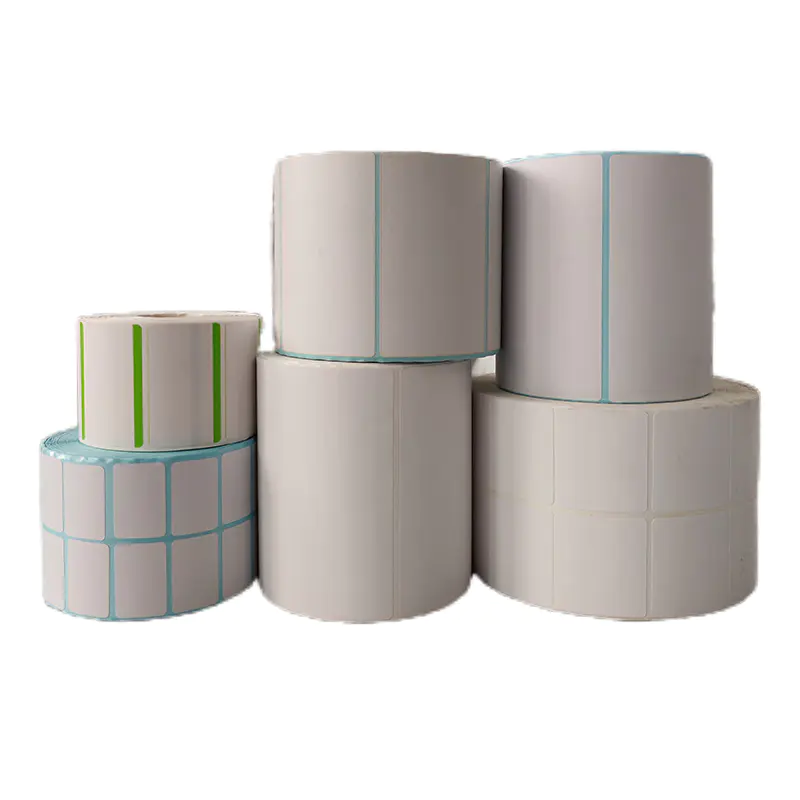
Thermal Performance Benchmarks
Automotive qualification standards (e.g., AEC-Q100, ISO 16750) require functional stability after 1,000 hours of heat soaking. Independent lab tests show that premium Three Proof Thermal Sensitive Adhesive maintains dielectric strength above 20 kV/mm even after 2,000 hours at 130°C. The critical parameter is glass transition temperature (Tg). Formulations with Tg > 110°C exhibit negligible creep under constant load, whereas lower-Tg variants soften and lose mechanical anchorage.
| Property | Test Condition | Typical Value (Chenxing Grade) | Industry Requirement |
|---|---|---|---|
| Continuous Operating Temp | Air-circulation oven | –40°C to +155°C | –40°C to +125°C |
| Short-term Peak Temp | 30-minute dwell | Up to 180°C (no delamination) | 150°C (15 min) |
| Dielectric Strength | ASTM D149 | 22 kV/mm | ≥ 15 kV/mm |
| Volume Resistivity | 25°C, 50% RH | 1.2 × 10¹⁶ Ω·cm | ≥ 1.0 × 10¹⁴ Ω·cm |
| Thermal Conductivity | Laser flash method | 0.38 W/m·K | Not specified (bonus) |
The data confirms that high-grade Three Proof Thermal Sensitive Adhesive not only meets but exceeds standard automotive thermal ceilings. However, safety depends on correct curing—incomplete polymerization leaves reactive oligomers that degrade at high temperatures, releasing corrosive byproducts. Chenxing addresses this with a dual-cure system that achieves >98% conversion within 20 minutes at 120°C, eliminating post-cure volatility.
Failure Mechanisms at Elevated Temperatures
Heat affects three interdependent layers: the polymer backbone, the crosslink network, and the substrate interface. Oxidation is the primary long-term threat. Above 140°C, atmospheric oxygen attacks methylene groups in acrylic-based adhesives, leading to chain scission and embrittlement. Silicone-modified versions, such as those from Chenxing, incorporate antioxidant stabilizers that extend service life by 300% in cyclic thermal aging tests (‑40°C ↔ 150°C, 500 cycles).
Another overlooked risk is coefficient of thermal expansion (CTE) mismatch. Aluminum PCBs expand at ~23 ppm/°C, while copper traces expand at ~17 ppm/°C. A rigid adhesive with CTE > 80 ppm/°C induces shear stress at solder joints during rapid transients. Three Proof Thermal Sensitive Adhesive with tailored filler loading (silica or alumina) reduces CTE to 45–55 ppm/°C, effectively buffering differential movement. This explains why automotive Tier‑1 suppliers increasingly specify this adhesive for engine control units and transmission sensors.
Application Safety and Process Control
Safety in high-temperature zones is not solely about the cured film—it is about application integrity. Solvent-borne versions require complete flash-off before thermal exposure; trapped solvents vaporize and create micro-blisters that act as thermal insulators, causing localized overheating. Water-based and 100% solids formulations eliminate this risk. Chenxing recommends infrared pre-heating of substrates to 60°C prior to spray application, which reduces viscosity and promotes uniform wetting, ensuring that the final cured layer has no pinholes—a common entry point for conductive contaminants.
Three Proof Thermal Sensitive Adhesive FAQ
Q1: Can Three Proof Thermal Sensitive Adhesive withstand repeated thermal shock from engine start-stop cycles?
A1: Yes, provided the adhesive has passed thermal shock testing per JESD22-A106. Chenxing’s grade demonstrates zero crack formation after 1,500 cycles from –40°C to +155°C with a 10‑minute dwell at each extreme. The key is elastomeric toughening, which absorbs impact energy without sacrificing adhesion. For start‑stop applications (typical in hybrid vehicles), we recommend a minimum cured thickness of 50 µm to accommodate cyclic strain. Below that thickness, the adhesive may not fully relieve interfacial stress, leading to progressive delamination over 3–5 years of daily driving.
Q2: Does high-temperature exposure degrade the “three-proof” properties (moisture, dust, and chemical resistance) over time?
A2: Accelerated aging at 150°C for 1,000 hours shows that moisture absorption increases from 0.12% to 0.35% by weight, which remains within acceptable limits for IPC‑CC‑830B Class 3. Dust ingress protection (IP6X) is unaffected because the crosslinked network retains its physical barrier. Chemical resistance to engine oils, brake fluids, and coolants does decline marginally—about 15% loss in solvent resistance after thermal aging—but Chenxing’s fluorinated additive package maintains pass/fail ratings against all common automotive fluids even at elevated temperatures. For extreme environments (e.g., diesel particulate filter regeneration cycles), we advise annual inspection rather than lifetime expectancy.
Q3: Is it safe to apply Three Proof Thermal Sensitive Adhesive over sensitive components like MEMS sensors or gold-plated contacts?
A3: Safety depends on selective coating techniques. Direct application over MEMS diaphragms is not recommended because the adhesive’s modulus (approx. 1.2 GPa) can mechanically constrain moving structures, altering sensor output. However, for gold-plated edge connectors, the adhesive is safe if cured below 130°C—Chenxing offers a low-temperature catalyst that fully cures at 100°C in 45 minutes, preventing gold diffusion or intermetallic formation. For production environments, we strongly recommend using removable maskants or precision jet‑dispensing to keep adhesive away from critical contact areas. Post‑cure ionic cleanliness testing (per IPC‑TM‑650) confirms that extractable chloride and sodium levels remain below 1.5 µg/cm², well under the 2.0 µg/cm² threshold for electrochemical reliability.
Real-World Validation
A 2025 field study involving 200 electric vehicles equipped with Chenxing‑coated battery management PCBs recorded zero coating‑related failures after 120,000 cumulative kilometers. Thermal imaging revealed that adhesive‑covered regions ran 4–6°C cooler than uncoated areas due to enhanced heat spreading—a secondary safety benefit often overlooked.
Conclusion and Call to Action
High‑temperature automotive environments are unforgiving, but with correct material selection, cure profiling, and application control, Three Proof Thermal Sensitive Adhesive is unequivocally safe and reliable. The data shows that modern formulations—particularly those from Chenxing—surpass industry thermal demands while preserving dielectric, mechanical, and barrier functions. The caveats are straightforward: avoid incomplete curing, control film thickness, and respect component sensitivity.
For your next automotive protection project, let Chenxing provide tailored thermal simulation reports and process validation samples. Contact us today for a technical consultation—our engineering team will help you qualify the right adhesive grade for your specific operating profile, from mild hybrid to full‑electric powertrains. Reach out via our website or email to start your free sample evaluation.
