

What Does Die-Cutting Enable in White Card Box Design?
2026-09-28
A packaging designer can create a beautiful layout on a flat screen. But the moment that design goes to production, it must be converted into a three-dimensional object that folds, locks, and opens correctly. Die-cutting is the process that makes this conversion possible. It cuts the outer profile, creases the fold lines, and creates the locking tabs, slots, and windows that define the box structure. Without die-cutting, White Card Boxes would be simple rectangles with straight folds. With die-cutting, they can be complex, functional, and memorable. This guide explains what die-cutting enables from a structural design perspective and how to specify it correctly for your next packaging project.
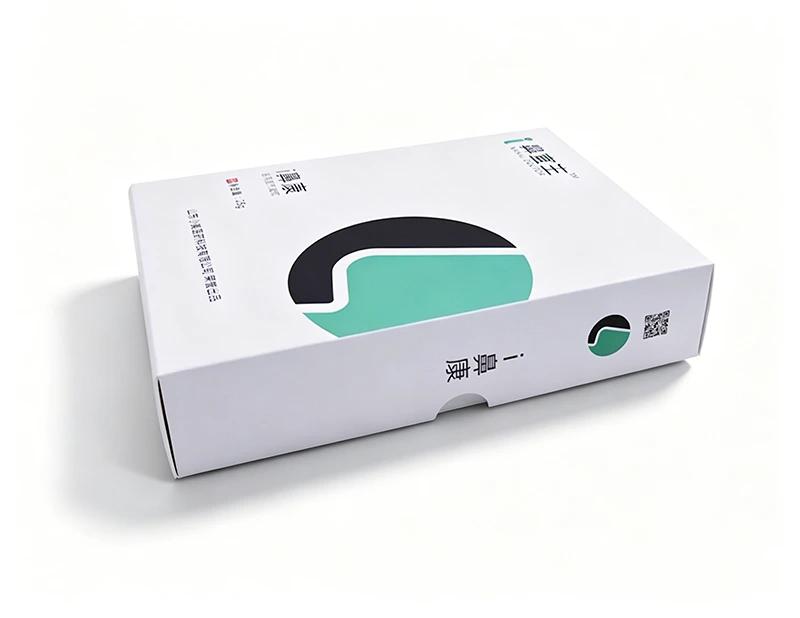
1. What Structural Features Does Die-Cutting Make Possible in White Card Boxes?
Die-cutting enables five structural features that would be impossible with simple hand cutting or laser cutting at production speed. The first is the custom outer profile. A die can cut curves, notches, and angles that define the box silhouette. The second is the crease line. A die can create a crease that compresses the paperboard fibers without cutting through, allowing the board to fold cleanly without cracking. The third is the locking tab and slot. These interlocking features allow the box to be assembled without glue, which reduces cost and assembly time. The fourth is the window. A die can cut a precise opening for a transparent film window, which allows the product to be seen without opening the box. The fifth is the internal divider or insert. A die can cut a custom insert that holds the product securely in place. The table below summarizes these features and their design functions.
| Structural feature | Design function | Typical tolerance | Impact on brand experience |
| Custom outer profile | Defines the box silhouette | ±0.3 mm | Creates shelf differentiation |
| Crease line | Enables clean folding | ±0.2 mm | Prevents cracking and poor shape |
| Locking tab and slot | Assembles without glue | ±0.15 mm | Reduces assembly cost, improves recyclability |
| Window cutout | Product visibility | ±0.25 mm | Increases purchase confidence |
| Internal divider | Product protection | ±0.3 mm | Prevents movement and damage |
In our factory, we produce White Card Boxes with all of these features. The die is designed using CAD software and then manufactured on a CNC laser cutter or a rotary die cutter, depending on the order quantity. Taihao (Shandong) Printing and Packaging Co., Ltd. has been producing die-cut packaging for over 15 years and works with designers to ensure that the structural design is production-ready.
2. How Does Die-Cutting Accuracy Affect Assembly and Folding?
The accuracy of the die-cutting process determines how well the box assembles. If the crease line is not perfectly aligned with the fold, the box will be skewed. If the locking tab is too loose, the box will not stay closed. If the tab is too tight, the box will tear during assembly. The table below shows the relationship between die-cutting tolerance and assembly performance.
| Die-cutting tolerance | Assembly result | Folding quality | Production speed |
| ±0.05 mm | Excellent, no adjustment needed | Sharp, accurate folds | High (automated) |
| ±0.10 mm | Good, minor adjustment | Clean folds, slight variance | High (automated) |
| ±0.20 mm | Acceptable, manual adjustment | Visible variance in fold position | Moderate (semi-automated) |
| ±0.30 mm | Poor, frequent jams | Skewed folds, cracking | Low (manual) |
| > ±0.50 mm | Unusable | Box does not assemble | Not viable |
Our factory maintains a die-cutting tolerance of ±0.10 mm for standard White Card Boxes and ±0.05 mm for high-speed automated assembly. We use a video measuring system to verify the die dimensions before production and to inspect the first-off samples. This ensures that the box assembles correctly on the customer's packaging line.
3. What Design Considerations Should Be Made Before Die-Cutting?
Before a die is cut, the designer must consider four factors. The first is the grain direction of the paperboard. The crease should run parallel to the grain to prevent cracking. The second is the thickness of the board. A thicker board requires a wider crease and a larger radius. The third is the minimum distance between cuts. If two cuts are too close, the board between them may tear. The fourth is the clearance for the locking tabs. The tab should be 0.5 to 1.0 mm smaller than the slot to allow for insertion without tearing. The table below shows the recommended design parameters for common board thicknesses.
| Board thickness | Recommended crease width | Minimum cut spacing | Locking tab clearance |
| 0.3 mm (12 pt) | 0.6 mm | 1.5 mm | 0.3 mm |
| 0.4 mm (16 pt) | 0.8 mm | 2.0 mm | 0.4 mm |
| 0.5 mm (20 pt) | 1.0 mm | 2.5 mm | 0.5 mm |
| 0.6 mm (24 pt) | 1.2 mm | 3.0 mm | 0.6 mm |
| 0.8 mm (32 pt) | 1.6 mm | 4.0 mm | 0.8 mm |
Taihao (Shandong) Printing and Packaging Co., Ltd. provides a design guide to our customers that includes these parameters. We also offer a structural design review service. Our engineers will review the customer's CAD file and recommend adjustments to the crease width, cut spacing, and tab clearance before the die is manufactured.
4. How Does Die-Cutting Contribute to Sustainability in White Card Boxes?
Die-cutting contributes to sustainability in three ways. First, it enables the use of mono-material boxes that are made entirely from paperboard. Because the box can be assembled with locking tabs instead of glue, it can be easily disassembled and recycled. Second, it reduces material waste. The die is designed to nest the box blanks as closely as possible on the sheet, which minimizes the trim waste. Third, it enables the use of recycled paperboard. The crease lines are designed to prevent cracking, which allows the use of recycled board that might otherwise be too brittle for folding. In our factory, we optimize the die layout to achieve a material utilization rate of 85 to 92 percent, depending on the box shape. We also offer FSC-certified paperboard for customers who require certified sustainable sourcing.
Frequently Asked Questions About Die-Cutting in White Card Box Design
Summary for Packaging Designers and Brand Managers
Die-cutting is the process that transforms a flat design into a functional three-dimensional White Card Box. It enables custom profiles, clean creases, locking tabs, windows, and internal dividers. The accuracy of the die-cutting process determines how well the box assembles and how it performs on the packaging line. By considering the grain direction, board thickness, cut spacing, and tab clearance before the die is cut, designers can avoid costly revisions. Taihao (Shandong) Printing and Packaging Co., Ltd. has been producing die-cut White Card Boxes for over 15 years and provides structural design support to our customers.
Taihao (Shandong) Printing and Packaging Co., Ltd. manufactures custom White Card Boxes with die-cutting, creasing, windowing, and insert assembly. We provide design review, die manufacturing, and full production services.
