

What Makes IML Label PP Coffee Cups by Injection Molding Ideal for Modern Beverage Packaging?
2026-10-08
In the competitive coffee and beverage packaging market, the cup is more than a container—it is an important part of the customer experience and brand identity. As brands look for packaging that combines attractive graphics, durability, production efficiency, and customization, in-mold labeling (IML) has become an increasingly valuable decoration technology. An IML Label PP Coffee Cup by Injection Molding integrates a pre-printed polypropylene label into the cup during the injection molding process, creating a seamless and durable finished surface. Unlike conventional adhesive labels that are applied after production, IML becomes an integral part of the molded cup. This approach can provide strong visual impact while supporting efficient large-volume production. For businesses seeking reliable and customized packaging solutions, Zhejiang Zhongyu Science and Technology Co., Ltd. provides professional IML label technology and packaging expertise for different applications.
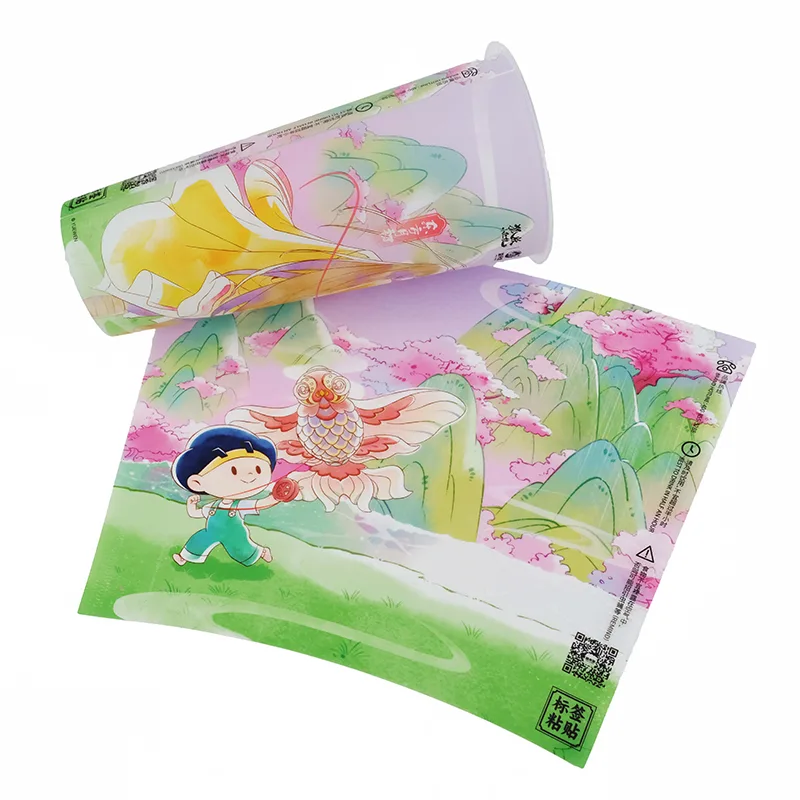
What Is an IML Label PP Coffee Cup by Injection Molding?
An IML coffee cup is generally produced by placing a precisely cut, pre-printed PP label into an injection mold before molten polypropylene is injected. During molding, heat and pressure allow the label and PP cup material to integrate into a single structure. The finished product comes out of the mold with its decorative surface already completed, eliminating the need for a separate labeling operation.
A typical production workflow includes:
-
Label design and printing – Graphics, logos, product information, and promotional elements are printed onto suitable IML film.
-
Die-cutting – The printed film is accurately cut according to the cup's dimensions and shape.
-
Label positioning – Automation, vacuum, or static-electricity systems can help position the label accurately inside the mold.
-
Injection molding – Molten PP is injected into the cavity and bonds with the compatible label.
-
Cooling and ejection – After cooling, the finished cup is removed with the label already integrated into its surface.
This process makes IML particularly attractive for packaging applications where appearance, repeatability, and production efficiency are important.
Why Is PP a Suitable Material for IML Coffee Cups?
Polypropylene is widely used for food and beverage packaging because of its combination of lightweight construction, chemical resistance, processability, and compatibility with PP-based IML films. When the label and molded part are based on compatible materials, they can form an integrated structure without relying on conventional pressure-sensitive adhesive labels.
For coffee cup applications, PP can provide several practical advantages:
-
Lightweight construction for convenient transportation and handling
-
Good dimensional stability when properly designed and molded
-
Suitable surface for high-quality IML decoration
-
Good moisture resistance for beverage packaging environments
-
Strong compatibility with automated injection molding
-
Potential mono-material advantages when PP is used for both cup and label
For brands producing large quantities of takeaway coffee cups, these characteristics can help balance packaging performance and manufacturing requirements.
What Effects Does IML Create on Coffee Cup Packaging?
One of the most noticeable advantages of an IML Label PP Coffee Cup by Injection Molding is its visual quality. The label can cover a large portion of the cup surface, allowing brands to display logos, illustrations, colors, promotional messages, and product information with a clean and consistent appearance.
Because the decoration is integrated during molding, the cup can achieve a smooth, professional finish without the visible edges commonly associated with separately applied labels. IML technology is also capable of producing detailed graphics and full-surface designs suitable for modern beverage branding.
For example, coffee brands can use IML decoration to create:
-
Full-wrap brand graphics
-
Seasonal coffee cup collections
-
Limited-edition designs
-
Promotional campaigns
-
Private-label beverage packaging
-
Customized café and takeaway cup series
The cup therefore becomes a practical marketing surface that travels with the consumer.
How Does IML Improve the Function of Coffee Cups?
The importance of IML is not limited to appearance. Since the label is integrated into the molded cup, it can offer advantages over conventional adhesive labels in applications where moisture, handling, or surface wear may be concerns.
| Feature | Conventional Adhesive Label | IML PP Coffee Cup |
|---|---|---|
| Label application | After molding | During molding |
| Surface appearance | Separate label layer | Integrated appearance |
| Label peeling risk | Possible | Greatly reduced |
| Moisture resistance | Depends on label/adhesive | Strong integrated construction |
| Design coverage | Usually flexible | Suitable for extensive surface coverage |
| Production process | Additional labeling stage | Decoration integrated into molding |
| Brand customization | High | High |
The exact performance depends on the label structure, ink system, cup design, molding conditions, and intended application. Therefore, professional material selection and process control remain essential.
Why Is IML Important for Coffee Brands?
Packaging often creates the first physical interaction between a customer and a beverage brand. A well-designed coffee cup can communicate quality before the customer even tastes the drink.
For coffee chains, beverage manufacturers, cafés, and private-label suppliers, IML can support three important business objectives:
1. Stronger brand recognition
High-quality graphics and extensive printing areas provide more opportunities to communicate brand identity. Consistent cup decoration can also strengthen visual recognition across multiple stores or product lines.
2. Better packaging durability
Because the decoration is integrated into the molded structure rather than simply attached afterward, the label is less vulnerable to conventional peeling or edge lifting.
3. More efficient mass production
IML combines decoration and injection molding into a coordinated manufacturing process. By reducing the need for a separate post-molding labeling operation, it can simplify production for suitable high-volume applications.
Which Applications Can Use IML PP Coffee Cups?
The technology is suitable for a wide range of beverage packaging scenarios, particularly where visual branding is important.
Typical applications include:
-
Coffee shop takeaway cups
-
Ready-to-drink coffee packaging
-
Milk tea and bubble tea cups
-
Juice and cold beverage cups
-
Dessert and yogurt containers
-
Promotional beverage cups
-
Private-label beverage products
-
Customized event and campaign cups
The ability to customize graphics makes IML especially useful for brands that frequently launch seasonal or limited-edition packaging.
How Can Zhejiang Zhongyu Support IML Packaging Projects?
Zhejiang Zhongyu Science and Technology Co., Ltd. specializes in in-mold labeling solutions and has experience covering label design, printing, processing, and application requirements. The company offers different IML effects and printing solutions, including options designed for high-quality visual presentation. Its current technology portfolio also includes innovative solutions such as dynamic grating IML, demonstrating the potential of IML to move beyond conventional static decoration.
For an IML Label PP Coffee Cup by Injection Molding project, professional cooperation should consider more than artwork alone. Key factors include:
-
Cup dimensions and wall thickness
-
PP resin compatibility
-
Label material and thickness
-
Printing method and color requirements
-
Label positioning accuracy
-
Mold structure
-
Injection temperature and pressure
-
Production volume
-
Intended beverage application
-
Packaging and transportation conditions
By evaluating these factors together, manufacturers can reduce production risks and achieve more consistent finished products.
What Should Buyers Consider Before Ordering?
Choosing an IML coffee cup supplier requires attention to both packaging design and manufacturing capability. Buyers should provide accurate cup dimensions, material requirements, artwork, expected order volume, and application information during the quotation stage.
It is also advisable to confirm samples before mass production. Sample testing can help evaluate label alignment, color reproduction, bonding performance, surface appearance, and overall molding quality.
For brands that require large-volume customized packaging, a supplier capable of coordinating label production and injection molding requirements can make the development process more efficient.
Conclusion
An IML Label PP Coffee Cup by Injection Molding combines packaging decoration and injection molding into an integrated manufacturing solution. Its seamless appearance, strong customization potential, durable decoration, and suitability for automated production make it an attractive option for modern coffee and beverage packaging.
For coffee brands looking to transform ordinary cups into recognizable brand assets, the right IML solution can improve both packaging performance and visual communication. Zhejiang Zhongyu Science and Technology Co., Ltd. can provide professional IML technology support and customized solutions for businesses seeking high-quality in-mold labeling applications.
If you are developing a customized PP coffee cup, exploring new IML packaging designs, or looking for a reliable partner for high-quality in-mold labeling solutions, contact us today to discuss your requirements and find the right solution for your project.
