

Why Are Glassine Bags Popular in E-Commerce Shipping?
2026-11-02
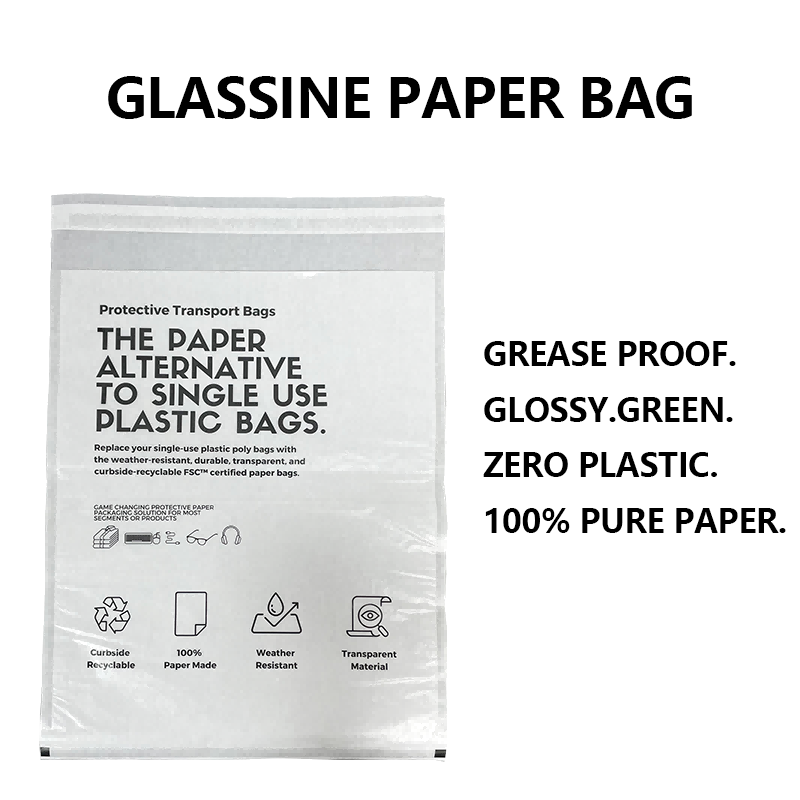
An e-commerce seller receives a complaint about a returned order. The product is a handmade soap wrapped in a plastic film bag. The buyer says the packaging is not recyclable and the soap has a plastic smell. The seller looks for an alternative. A kraft paper bag is recyclable but the oil from the soap stains the paper and the bag tears at the seam. A wax paper bag resists oil but the wax coating prevents recycling in the paper stream. The seller then evaluates a 40gsm glassine paper bag. The bag resists oil without a coating, prints well, and goes into the paper recycling bin. This guide explains why glassine bags have become popular in e-commerce shipping and what to verify before ordering.
1. Why Does E-Commerce Shipping Keep Searching for a Packaging Material Between Plastic and Paper?
E-commerce packaging must satisfy four requirements at the same time. The first is protection. The bag must resist moisture, oil, and abrasion during transit. The second is printability. The bag is a branding surface, and the print must be sharp and durable. The third is weight. Every gram of packaging adds to the shipping cost, and the carrier charges by weight or by dimensional weight. The fourth is recyclability. Consumers and marketplaces increasingly reject packaging that cannot be recycled. Plastic film bags meet the first three requirements but fail the fourth. Kraft paper bags meet the fourth requirement but fail the first. The 40gsm glassine paper bag meets all four because its paper structure is dense enough to resist oil and moisture without a plastic coating. In our factory, we produce glassine bags for e-commerce, retail, and food service. Zeal X International Limited has been supplying paper packaging for over 10 years.
The search for the middle ground is not new. What is new is the scale of e-commerce and the regulatory pressure on packaging waste. A material that was once a niche product for stamp collectors and bakery windows is now a mainstream shipping option.
2. What Exactly Is Glassine Paper and Why Does It Sit Between Paper and Film?
Glassine paper is made from wood pulp that is beaten to a very high degree of fibrillation. The long beating breaks the fibers into fine fibrils, and the sheet is then supercalendered under high pressure and temperature. The result is a paper with very low porosity, a smooth surface, and a slight transparency. The density and the smoothness are what give glassine its oil and grease resistance without a coating. The 40gsm grade is the most common for e-commerce bags because it balances strength, transparency, and cost. The table below compares glassine with other common bag materials.
| Material | Grammage | Oil resistance | Moisture resistance | Recyclable in paper stream |
| 40gsm glassine | 40 g/m² | Good (kit 6 – 8) | Moderate | Yes |
| Kraft paper | 70 – 90 g/m² | Poor | Low | Yes |
| Wax paper | 40 – 60 g/m² | Good | Good | No (wax coating) |
| PE film bag | 25 – 50 g/m² | Excellent | Excellent | No (separate stream) |
The oil resistance of glassine is measured by the TAPPI T559 kit test, which rates the resistance on a scale from 1 to 12. A 40gsm glassine typically rates 6 to 8, which is sufficient for soap, cosmetics, and baked goods. In our factory, we test the oil resistance of every production lot and provide the kit rating with the shipment. Zeal X International Limited also provides the food contact compliance certificate for the food grade glassine.
3. How Does 40gsm Grammage Balance Protection, Printability, and Shipping Cost?
The grammage determines the balance between protection and cost. A lower grammage, around 30gsm, is more transparent and lighter, but it tears more easily and has lower oil resistance. A higher grammage, around 60gsm, is stronger and more opaque, but it adds weight and cost. The 40gsm grade is the most common because it provides adequate strength for small to medium e-commerce items, good printability, and a weight that does not significantly increase the shipping cost. The table below shows the suitability of different grammages for e-commerce applications.
| Grammage | Typical thickness | Oil resistance | Printability | Best application |
| 30gsm | 0.03 mm | Kit 5 – 6 | Good | Light apparel, accessories |
| 40gsm | 0.04 mm | Kit 6 – 8 | Very good | Soap, cosmetics, small electronics |
| 50gsm | 0.05 mm | Kit 7 – 9 | Very good | Baked goods, heavier items |
| 60gsm | 0.06 mm | Kit 8 – 10 | Good | Industrial parts, sharp edges |
Packaging buyer's note: The 40gsm grade is not a universal answer. If the product has sharp edges or weighs more than 1 kilogram, a 50gsm or 60gsm grade is safer. If the product is a light garment and the bag is only a dust cover, a 30gsm grade is sufficient. In our factory, we recommend the grammage based on the product weight, the edge sharpness, and the shipping method. Zeal X International Limited provides a grammage recommendation chart with each quotation.
4. Why Do Recyclability and Consumer Perception Make Glassine a Strategic Packaging Choice?
Glassine is a paper product, and it is accepted in the paper recycling stream in most markets. It does not have a plastic coating or a wax layer, so it does not need to be separated from other paper. The consumer can place the bag in the paper bin without any special instruction. This is a significant advantage over PE film bags, which are accepted only at dedicated drop-off points, and over wax paper, which is often rejected by paper mills. The consumer perception is also favorable. A paper bag signals a natural and premium product, while a plastic bag signals a mass-market product. In our factory, we source glassine from mills that use FSC-certified pulp, and we provide the FSC chain of custody certificate with the shipment. Zeal X International Limited can also print the recycling instructions directly on the bag to help the consumer dispose of it correctly.
We also recommend that the seller check the local recycling guidelines, because the acceptance of glassine can vary by municipality. In most of Europe and North America, glassine is accepted with mixed paper. In some regions, the very smooth surface can cause the bag to be classified as a composite material, and the seller should verify before making a recycling claim.
5. How Should E-Commerce Sellers Specify and Verify a 40gsm Glassine Paper Bag?
The specification should include six items. The first is the grammage and the tolerance. The second is the bag size and the gusset. The third is the oil resistance kit rating. The fourth is the print method and the ink type. The fifth is the closure method, which can be adhesive tape, heat seal, or a sticker. The sixth is the recycling and food contact certification. The verification should include four tests. The first is the grammage measurement. The second is the oil resistance kit test. The third is the seam strength test. The fourth is the print adhesion tape test. In our factory, we perform these tests on a sample basis for each production lot and provide the test report with the shipment. Zeal X International Limited also offers a pre-production sample for the seller to evaluate.
We recommend that the seller verify the closure compatibility before ordering. A heat seal closure requires a heat sealable coating, which reduces the recyclability of the bag. An adhesive tape closure does not require a coating and keeps the bag fully recyclable. A sticker closure is the simplest option, but it can be peeled off in transit. The seller should test the closure with the actual product weight and the actual shipping method.
Frequently Asked Questions About Glassine Bags in E-Commerce Shipping
Summary for E-Commerce Sellers and Packaging Buyers
Glassine bags are popular in e-commerce shipping because the 40gsm glassine paper bag combines oil resistance, printability, light weight, and recyclability in a single material. The dense paper structure provides oil resistance without a plastic coating, and the paper base is accepted in the paper recycling stream. The grammage must be matched to the product weight and the edge sharpness, and the closure must be matched to the packing method. The specification should include the grammage, the oil resistance kit rating, the closure method, and the food contact or recycling certification. The verification should include grammage, oil resistance, seam strength, and print adhesion tests. Zeal X International Limited has been supplying paper packaging for over 10 years and provides full material and testing support for e-commerce sellers.
