

Why QGM Block Making Machine Is a Profitable Investment for Block Businesses?
2026-11-12
A block plant owner is comparing two quotations for a new production line. The first is a low cost machine with a manual pallet handling system. The second is a QGM Block Making Machine with automatic pallet feeding, a servo vibration system, and a remote monitoring module. The first machine is 35 percent cheaper on the invoice. The owner calculates the cost per block over five years and finds that the second machine produces a block at 18 percent lower cost, because it uses less cement, rejects fewer blocks, and requires fewer maintenance hours. This is why the QGM Block Making Machine is a profitable investment for block businesses. This guide explains the cost structure, the capacity utilization, and the verification method that support the conclusion.
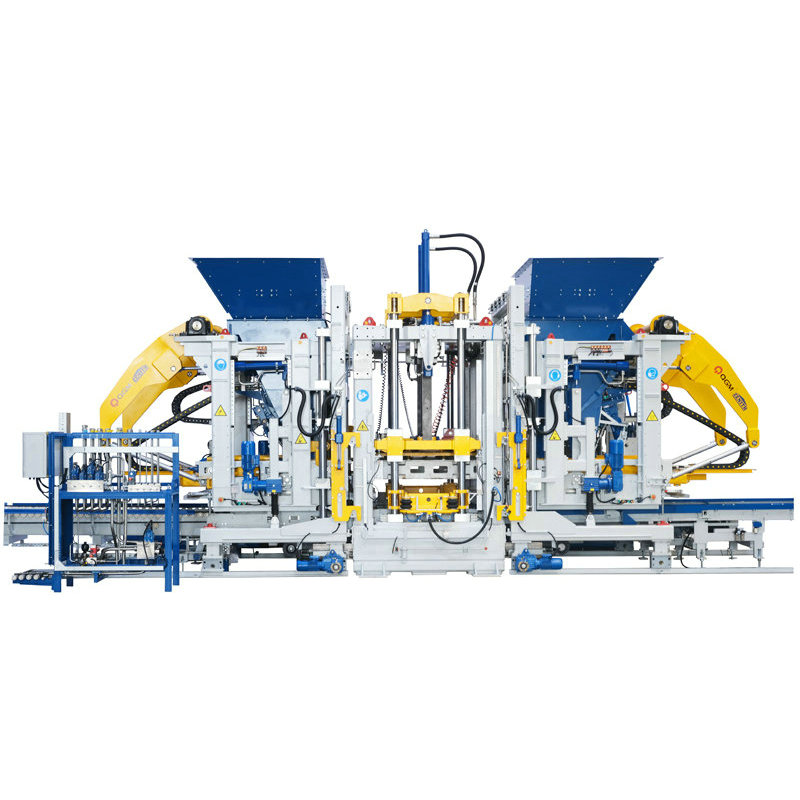
1. Why Does the Invoice Price Hide the Real Cost Per Block?
The invoice price is only the first cost. The real cost per block includes the raw material, the energy, the labor, the maintenance, the spare parts, and the downtime. A machine that is cheaper on the invoice may consume more cement per block, produce more rejects, and require more frequent repair. Our factory has compared the cost per block for several machine configurations in customer plants. The comparison shows that the automatic configuration with a servo vibration system reduces the cement content by 8 to 12 percent because the compaction is more uniform, and it reduces the reject rate from 4 percent to under 1.5 percent because the pallet handling is stable. In our factory, we produce the QGM Block Making Machine in several configurations and we provide the cost per block calculation for each configuration. Quangong Machinery Co., Ltd. has been manufacturing block making machines for over 15 years.
The cost per block is the number that the owner should use for the investment decision. A machine with a higher invoice price but a lower cost per block will generate a higher profit over the life of the plant, provided that the plant can sell the additional output.
2. What Are the Main Cost Components and How Does the Machine Affect Each One?
The cost per block has five components. The first is the raw material, which is mainly the cement, the sand, and the aggregate. The machine affects the cement content through the compaction efficiency and the mixing uniformity. The second is the energy, which is mainly the electricity for the motor and the vibration system. The machine affects the energy through the drive efficiency and the vibration control. The third is the labor, which is mainly the operators and the pallet handlers. The machine affects the labor through the automation level. The fourth is the maintenance, which is mainly the spare parts and the technician hours. The machine affects the maintenance through the component quality and the accessibility. The fifth is the downtime, which is the lost production during a breakdown. The machine affects the downtime through the reliability and the diagnostic capability. The table below shows the cost components for two machine configurations.
| Cost component | Manual configuration | Automatic configuration (QGM) |
| Cement per block | 0.42 kg | 0.37 kg |
| Energy per block | 0.18 kWh | 0.13 kWh |
| Labor per 1,000 blocks | 4.2 hours | 2.1 hours |
| Reject rate | 4.0% | 1.2% |
| Maintenance cost per 10,000 blocks | $28 | $16 |
| Downtime per month | 18 hours | 6 hours |
| Cost per block (indicative) | $0.31 | $0.25 |
The automatic configuration reduces the cost per block by about 19 percent in this example. The largest contributors are the cement saving and the reject rate reduction. The labor and the energy also contribute, but the raw material and the quality are the dominant factors. In our factory, we verify the cement content and the reject rate on every customer installation and we adjust the mix design and the vibration parameters to reach the target cost per block. Quangong Machinery Co., Ltd. provides the cost per block template with each quotation.
3. How Does Capacity Utilization Decide Whether the Investment Pays Back?
The payback period depends on the capacity utilization. A machine that runs at 40 percent of its rated capacity has a higher cost per block than the same machine running at 80 percent, because the fixed costs, such as the depreciation, the building, and the supervision, are spread over fewer blocks. The QGM Block Making Machine is designed to maintain a stable cycle time across the capacity range, so the cost per block does not increase as much when the output is reduced. The table below shows the payback period at different capacity utilization levels for a 10 million block per year plant.
| Capacity utilization | Annual output (million blocks) | Annual profit (indicative) | Payback period |
| 40% | 4.0 | $180,000 | 4.2 years |
| 60% | 6.0 | $340,000 | 2.3 years |
| 80% | 8.0 | $510,000 | 1.5 years |
| 100% | 10.0 | $680,000 | 1.1 years |
Block plant owner's note: The payback period is sensitive to the capacity utilization. A plant that cannot sell the output will not achieve the payback, regardless of the machine quality. In our factory, we recommend that the owner secure the sales contracts before committing to the investment, and we help the owner size the machine to the expected demand, not to the maximum capacity. Quangong Machinery Co., Ltd. provides a demand analysis and a machine sizing recommendation with each project.
4. Why Does Downtime Cost More Than the Spare Parts?
The downtime cost is often underestimated. A machine that is down for one day loses the production of that day and the profit margin on that production. For a plant that produces 30,000 blocks per day and sells them at a margin of $0.08 per block, the lost profit is $2,400 per day. The spare part that caused the downtime may cost only $200. The downtime cost is twelve times the spare part cost. The QGM Block Making Machine is designed with condition monitoring and quick access panels to reduce the mean time to repair. The hydraulic system has a pressure and temperature sensor that alerts the operator before a failure. The mold change system is designed for a 15 minute changeover, so the production loss during a product switch is minimized. In our factory, we track the downtime for each installation and we use the data to improve the design. QGM provides a spare parts kit with each machine and a recommended maintenance schedule.
We also recommend that the owner keep a critical spare parts stock on site. The stock should include the hydraulic seals, the vibration motor bearings, the pallet feed chain, and the control module. The stock reduces the wait for a part and keeps the downtime to the repair time, not the repair time plus the shipping time.
5. How Should an Owner Verify the Investment Return Before and After Purchase?
Before the purchase, the owner should verify three things. The first is the cost per block, calculated from the actual material prices, the energy price, the labor rate, and the expected reject rate. The second is the capacity utilization, based on the confirmed sales contracts and the seasonal demand pattern. The third is the maintenance and downtime assumption, based on the supplier's service record and the local spare parts availability. After the purchase, the owner should track the actual cost per block, the actual capacity utilization, and the actual downtime every month and compare them with the assumptions. In our factory, we provide a monitoring module that records the production count, the cycle time, the energy consumption, and the fault codes. The data is accessible through a dashboard and can be exported to a spreadsheet for the monthly review. Quangong Machinery Co., Ltd. provides the dashboard and the monthly review template with each machine.
We recommend that the owner review the investment return at the end of the first year and adjust the mix design, the maintenance schedule, and the sales plan based on the actual data. The machine is a tool, and the profit depends on how the tool is used.
Frequently Asked Questions About QGM Block Making Machine Profitability
Summary for Block Plant Owners
The QGM Block Making Machine is a profitable investment for block businesses because it reduces the cost per block through lower cement content, lower reject rate, lower energy consumption, and lower downtime. The profit depends on the capacity utilization, so the machine should be sized to the confirmed sales demand, not to the maximum capacity. The downtime cost is often larger than the spare parts cost, so the maintenance and the spare parts stock should be planned. The investment return should be verified before the purchase with a cost per block calculation and after the purchase with a monthly review of the actual data. Quangong Machinery Co., Ltd. has been manufacturing block making machines for over 15 years and provides full investment analysis and monitoring support for our customers.
